
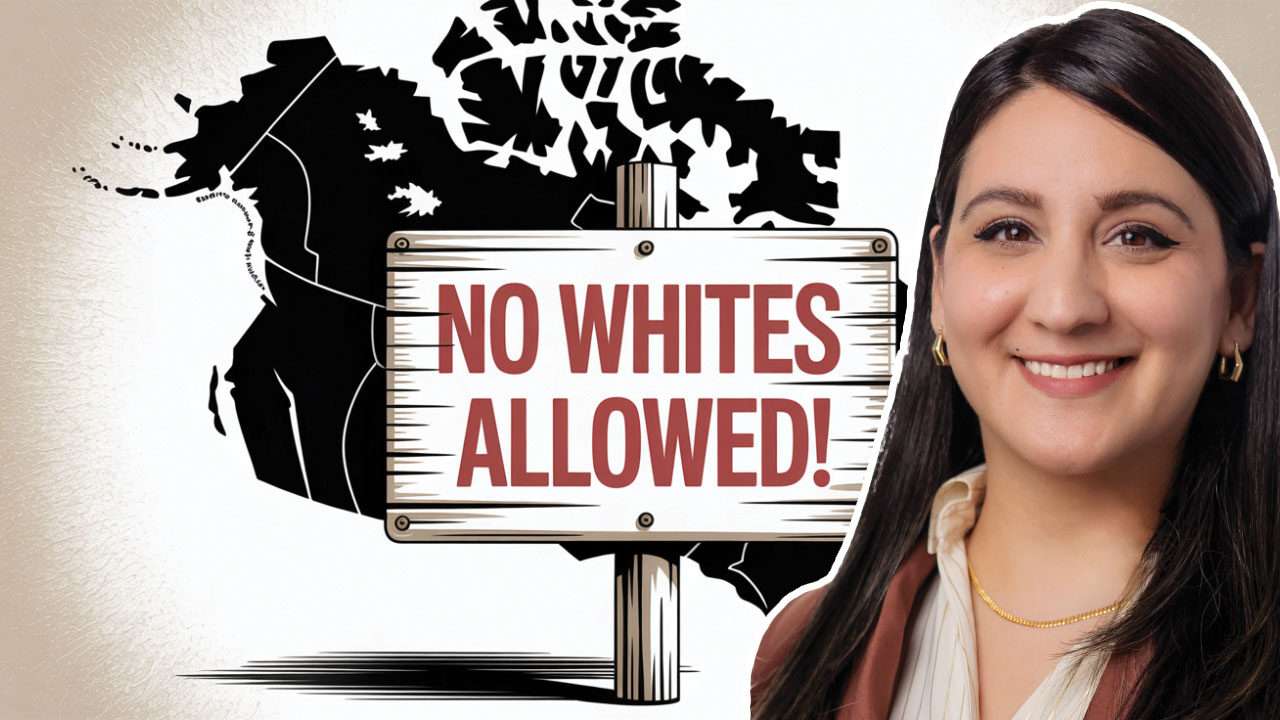
I should put a disclaimer here for the thin-skinned woke people out there that this article will probably trigger you.
When I stumbled upon that video of BC MLA Rohini Arora unloading such nonsense, I almost lost my shit! Honestly, it was like watching a train wreck—bizarre, chaotic, and hard to look away from! How can someone be so out of touch and still think they’re making sense? It was a classic case of someone talking just to hear themselves speak, and let me tell you, it was one wild ride!


Here’s an immigrant from India giving a good scolding to the dead European settlers who came here in the 1700s. It’s funny how she feels it’s fine for her family to enjoy everything about “white people’s” culture, while pointing fingers at those who came before her. If you think about it, even the Indigenous people didn’t just pop up here; they migrated from somewhere else, also. Everyone has a history of moving around, so why pretend that one group is better or more deserving than another? It’s time to face the truth: we are all products of migration, no matter where we came from.
RCMP Can’t Read The Room

It’s like when the RCMP holds a press conference about two missing kids from Nova Scotia and starts with some “land acknowledgment.” Seriously? The focus should be on those two missing children, not on a bunch of formalities that nobody cares about! People are outraged, and how hard is it to just read the damn room? It’s unbelievable that in a time of crisis, they waste time on stuff that doesn’t matter when kids are missing!
In an alternate outlook
Here’s an alternate take. The indigenous people are living on white people’s land. Land that was conquered and ceded. They are spending white people’s money, wearing white people’s clothing, speaking white people’s language. They are appropriating white people’s culture. But oh no, you can’t say that; it’s racist! It’s not actually a good thing to say, but it’s the point I’m trying to make here. Everyone in Canada right now needs to be treated equally. There is no longer any of this “Who was here first?” bullshit.
Who Really Belongs? Unpacking the Irony of Canadian Identity in a Modern World

Don’t even get me started on how we shouldn’t forget to mention the part where we built the modern world and then allowed third-world immigrants to use Western exceptionalism to escape the hellholes they built. I’m sure by this point you’re either triggered, cringing, or shouting, “exactly!” But stick with me here. I think it’s important for Canadians to hear what I’m actually saying and should read till the end of the article and then make their own opinion in the comments below.
Don’t you find it funny how people decide who belongs and who doesn’t, who’s a “real” Canadian and who’s just an “uninvited guest?” Imagine BC MLA Rohini Arora saying that white people, even those whose families have lived in Canada for 20 generations, are uninvited guests who don’t really belong here. But if you turned around and told immigrants in Brampton, Ontario, to “go back home,” you’d be called a hateful bigot in a heartbeat. Even though some of those immigrants might have only been in Canada for a few years, or even a few hours.
The Paradox of Belonging: Why Are White Canadians Treated as “Uninvited Guests” in Their Own Land?
We’re told that immigrants are just as Canadian as anyone else the moment they arrive. They step off the plane, and boom—they’re as Canadian as someone whose family has been here for 400 years. But white Canadians? After 400 years, they’re still “uninvited guests” who don’t belong, according to some. They’re told to shut up and deal with it.
It seems like no matter where they are, white people are always labelled as outsiders who don’t have a real claim to the land they’re on. According to some folks, white people are the only group in the world who can never truly call any place “home.” They’re never “native” to anywhere.
People might say a white person’s real home is somewhere in Europe. But if a white person in, say, England said, “This is a white country,” they’d be slammed for it. In Canada, we’re told this land isn’t ours—it’s stolen. So, where’s our land? If you ask that question, nobody will say, “Oh, Europe is for white people.” They won’t say that. So, where do we belong?
The message seems to be that there’s no place on Earth where white people can say, “This is my homeland.” A white person isn’t native to anywhere. They’re not indigenous to any country. Isn’t that weird? How does that even work? Where did white people come from? Did they just pop out of nowhere? Did they drop from the sky?
When Does a White Canadian Truly Become Indigenous? Rethinking Belonging and Identity in Canada
If a white Canadian can trace their family back to the 1600s in this country, does that make them a Native Canadian? At what point can they say, “Yeah, I’m from here. This is my home”? How many years does their family need to be here? 200 years? 300? 400? Is that enough? Or is it 10 generations? 20? 30? When is it okay to say, “I’m native to Canada”?
And if the answer is, “Never, no matter how long your family’s been here,” then where is their homeland? If they go to Europe, can they call themselves native there? Can they say immigrants there are “invading” or “stealing” their land? Nobody on the left has an answer for this. Why? Because words like “native,” “colonizer,” “invader,” and “indigenous” are just used to push a point. They don’t really mean anything solid—they’re just tools to make people feel a certain way.

So, at what point does a White person become indigenous? How many generations of people born in Canada does it take to become indigenous? I’m not a colonizer. I am not responsible for what people did hundreds of years ago. I was born here, so I am a white indigenous person. I am a white native person. It’s time that we think about all Canadians equally. Everyone, as equals. Canada is to diverse for these bullshit divisive titles.
Conclusion…

In a world where identity is constantly debated and boundaries are blurred, it seems the narrative shifts depending on who’s telling the story. Are we truly to believe that being Canadian is solely determined by ancestry and historical claims, or can we embrace a broader definition that includes everyone who contributes to this mosaic we call home?
At the end of the day, isn’t it time to rethink these labels and definitions that so often divide us? When does cultural exchange become cultural theft? And who gets to define the rules of belonging? I challenge you to reflect on these questions and share your thoughts below. Did this article resonate with you? Do you see where I’m coming from?
If you enjoyed this discussion and want to keep exploring these complex topics, subscribe to the website notifications. Your support really helps keep the conversation going!


Leave a Reply