

Outrage on Remembrance Day!

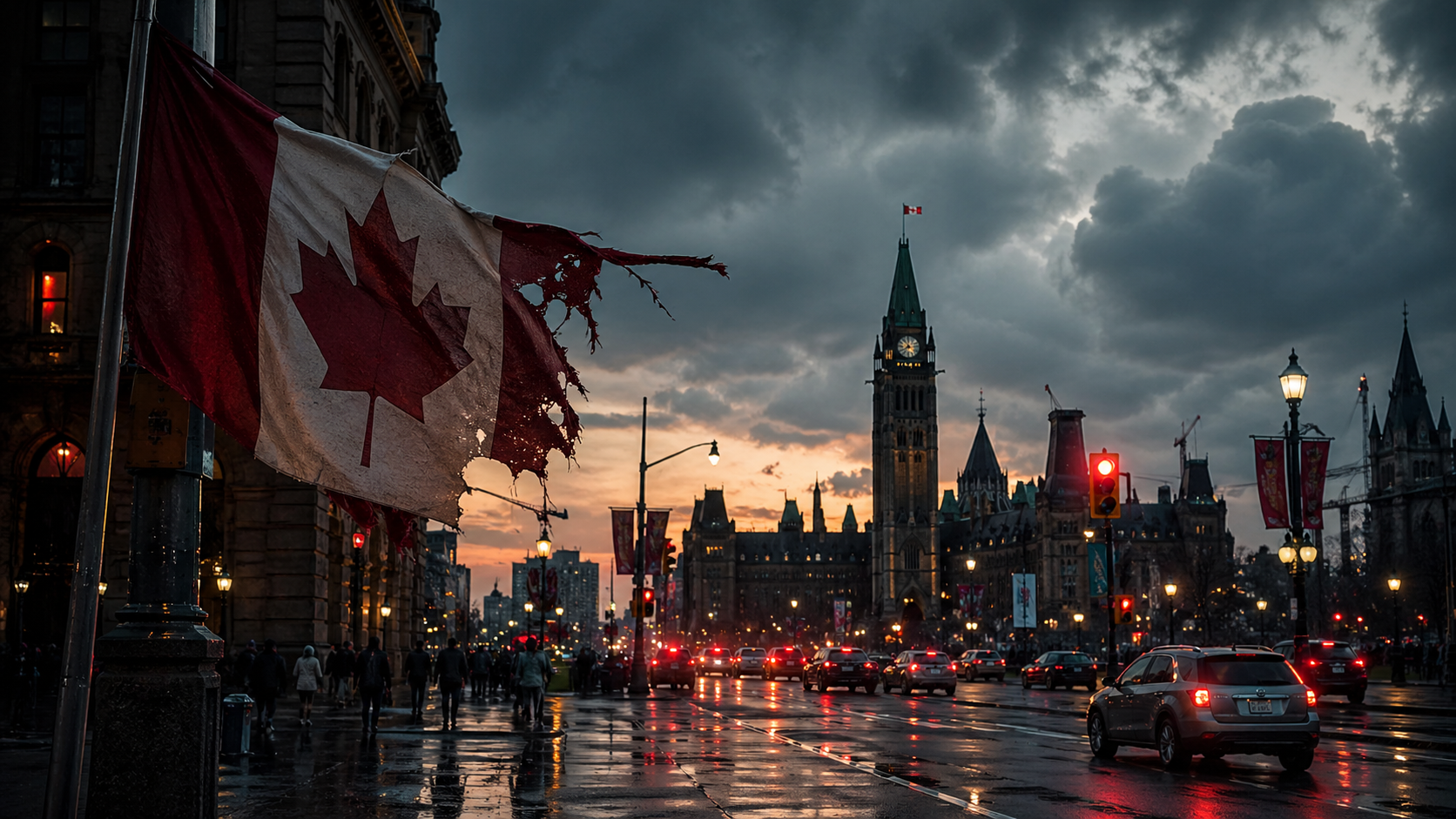
A day for solemn reflection, a moment to pause and remember. A day to honour the sacrifices of those who served, and to pay tribute to their bravery and dedication. A day for sombre melodies and the hushed reverence of a grateful nation, united in remembrance. At least, that’s how it’s supposed to be, a time for quiet reflection. But at Sir Robert Borden High School in Ottawa, Canada, this Remembrance Day had a different soundtrack, one that was unexpected. One that left students and parents bewildered, angered, and frankly, a little terrified, as they tried to make sense of it.
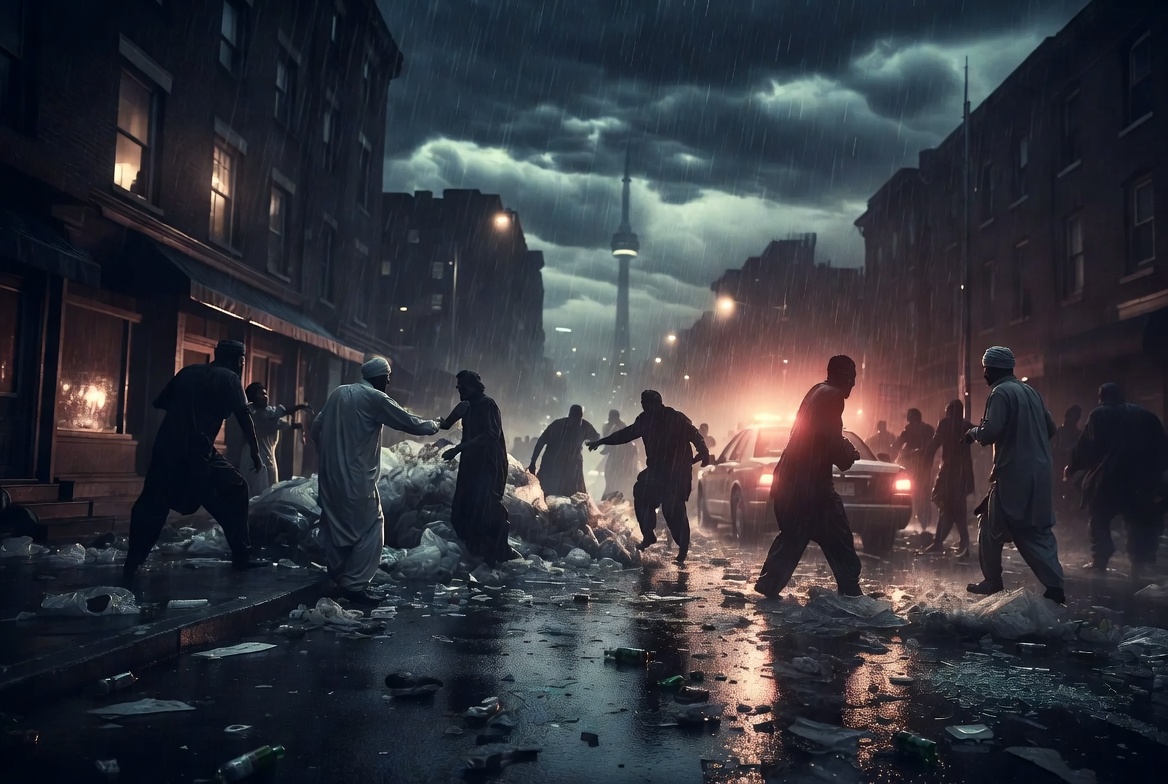
Instead of the traditional hymns and mournful bugle calls, an Arabic-language song filled the assembly hall, echoing through the space. A song unfamiliar to most, creating an atmosphere of confusion and unease. A song some would later recognize as an anthem of Palestinian protest, a stark contrast to the day’s usual tone. A song jarringly out of place amidst the poppies and the portraits of fallen soldiers, clashing with the solemnity of the occasion.
It was a decision that would ignite a firestorm of controversy, throwing the school into the center of a national debate about political correctness, cultural sensitivity, and the sanctity of Remembrance Day itself, sparking conversations across the country.
The song in question, Haza Salam by Mahim Ahmed, translates to This is Peace. A title that, at first glance, suggests a message of harmony and tranquillity. On the surface, a seemingly innocuous title evokes images of serene landscapes and a world free from conflict. But context, as they say, is everything.
The true meaning of a song can often be found in the circumstances surrounding its release. Released shortly after the horrific Hamas attacks on Israel on October 2023, the song quickly became associated with Palestinian protests and the ongoing conflict in Gaza.

Its timing was no coincidence. Videos emerged online, featuring Haza Salam as the soundtrack to images of clashes between Palestinians and Israeli forces. The song’s peaceful title stood in stark contrast to the violent imagery it accompanied. The song, intended by some as a message of peace, was rapidly weaponized as a rallying cry for one side of a deeply complex and painful conflict.
Its lyrics, meant to soothe, were instead used to fuel the fire of division. So, was it a song of peace? Or a song of protest? The lines between the two became increasingly blurred. The answer, it seems, depends on who you ask. For some, it remains a beacon of hope; for others, a symbol of resistance. But one thing is certain- its inclusion in a Remembrance Day ceremony, a day meant to honour those who fought for peace, was a decision both tone-deaf and deeply offensive to many. The controversy surrounding the song only deepened the divide.

As outrage spread through the school community and beyond, Principal Aaron Hobbs found himself standing in the eye of the storm. His initial response? A masterclass in how not to handle a public relations crisis. In a statement that can only be described as a masterpiece of bureaucratic doublespeak, Hobbs defended the song choice as an attempt to broaden the scope of Remembrance Day and promote diversity and inclusion.
He argued that the day should not be limited to a traditional focus but should encompass a wider message of peace. The problem? No one was buying it. Parents, students, and even government officials were quick to point out the obvious- Remembrance Day is not about abstract notions of peace. It’s about honouring the specific sacrifices of those who fought and died for our freedom. It’s about remembering the human cost of war, not making clumsy attempts at political messaging.

The backlash to Hobbs’ initial statement was swift and brutal. Parents, many of whom had relatives who served in the armed forces, were appalled. Students, particularly Jewish students who felt targeted by the song choice, were left feeling hurt, confused, and deeply unwelcome in their own school.

“My grandfather landed on Juno Beach on D-Day,” one parent remarked. “He didn’t risk his life so that his great-grandchildren could be subjected to Palestinian propaganda in a Canadian school.” Another parent, whose son attended the assembly, put it even more bluntly. “This isn’t about diversity or inclusion. It’s about common decency. Our kids went to school to honour heroes, not to be indoctrinated.” The message was clear- Remembrance Day is not the time or place for political statements, especially ones that evoke such raw emotions and painful historical baggage.
While the school administration may have been well-intentioned in its attempt to promote peace and unity, the song choice itself revealed a staggering lack of awareness and sensitivity to the broader implications. Haza Salam, far from being a universal anthem of peace, carries with it a specific and deeply political subtext that cannot be ignored.
The song’s lyrics, while seemingly benign on the surface, take on a different and more complex meaning when viewed through the lens of the Israeli-Palestinian conflict. Lines like “We will not be silent anymore and Our land will be free” resonate strongly with the Palestinian narrative of resistance and liberation, a narrative that many Canadians, particularly those in the Jewish community, find deeply problematic and concerning.
The school’s insistence on playing this particular song, especially in the wake of the recent Hamas attacks, felt to many like a deliberate provocation and an insensitive choice. It was as if the school, whether consciously or not, was taking sides in a conflict that had no place in a Remembrance Day ceremony, a day meant to honour and remember those who have sacrificed for peace.
The controversy at Sir Robert Borden High School quickly escalated beyond the schoolyard. Politicians, pundits, and social media users weighed in, turning the incident into a lightning rod for broader debates about free speech, political correctness, and the role of religion in public schools.
Conservative politicians, sensing an opportunity to capitalize on public outrage, seized on the incident as an example of woke ideology gone too far. They accused the school of betraying Canadian values and disrespecting the sacrifices of veterans. The school board, caught in the crossfire, found itself facing mounting pressure to take action. Calls for Principal Hobbs’ resignation grew louder by the day. The incident, once a local controversy, had become a national scandal.
In the aftermath of the controversy, Sir Robert Borden High School issued a tepid apology, acknowledging that the song choice had caused offence and discomfort. But the damage, it seems, had already been done. The incident serves as a stark reminder of the importance of sensitivity and respect, particularly when dealing with sensitive historical events and deeply held beliefs. It highlights the dangers of political grandstanding and the need for open and honest dialogue within our communities.
Remembrance Day, at its core, is about unity. It’s about remembering the sacrifices of those who fought for the freedoms we enjoy today. It’s about honouring their memory by striving for a more peaceful and just world. Let us hope that the lessons learned from this unfortunate incident will prevent such a travesty from happening again.
Conclusion…

As we reflect on the events at Sir Robert Borden High School, it becomes painfully clear that the intersection of remembrance and politics can lead to potent misunderstandings and disrespect. Aaron Hobbs’ decision to infuse a politically charged song into a day meant for honoring sacrifice has not only alienated many within his community but has also sparked a broader dialogue about the purpose of Remembrance Day. Should such a day be a canvas for ideologies, or is it a sacred space reserved for reflection and acknowledgment of those who fought for our freedoms? The line between commemoration and political advocacy is delicate, and crossing it can have far-reaching consequences.
What do you think? Share your thoughts in the comments below. How do you feel about Aaron Hobbs’ choice to incorporate his political ideology into Remembrance Day ceremonies? Is there ever a place for such discourse in the context of honoring fallen heroes? Let’s open the floor to your opinions and insights.


One response to “Ottawa School Sparks Outrage with Insane Palestinian Protest Song on Remembrance Day!”
Canada’s justice system is broken. Predators walk free on bail, poppies banned in courtrooms, and agencies act without proof, all while Canadians pay the price. Here’s my take on the Canada two-tier justice system.