
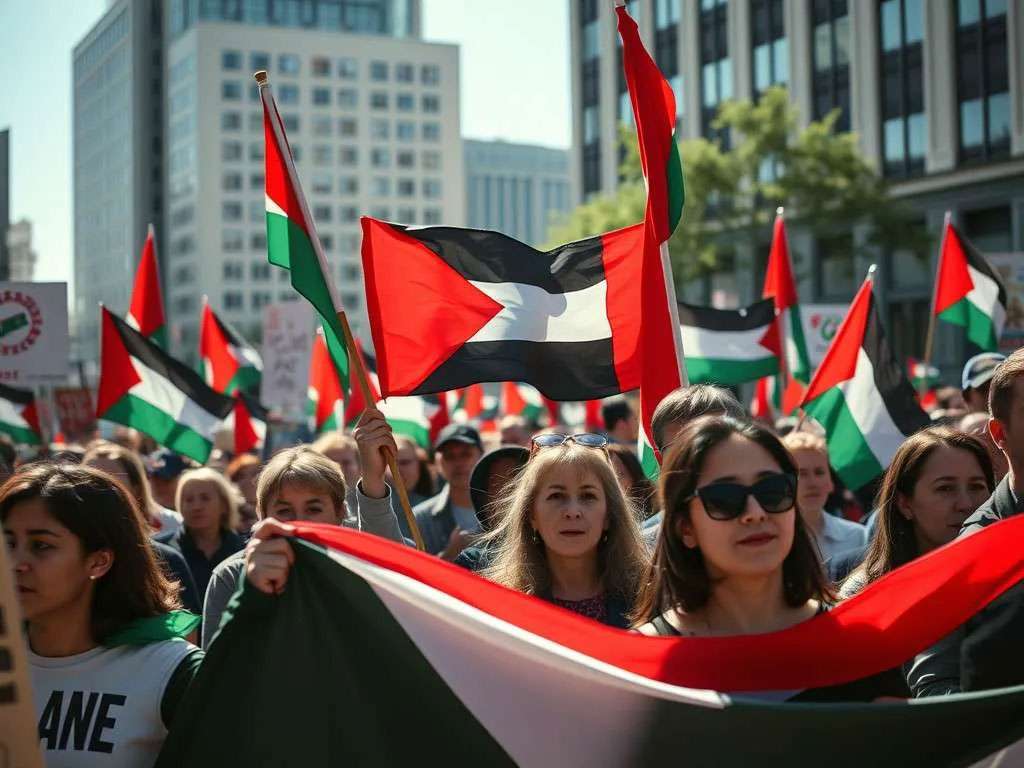
Join me as I dive into the legalities of pro-Palestine protests in Canada and see if I can find out just how far those rights really go!
Pro-Palestine protests have been a common sight in Canada in recent years, with many Canadians taking to the streets to express their solidarity with the Palestinian people. But have you ever stopped to think about whether these protests are actually legal? I mean, we’re talking about a country with a strong tradition of freedom of speech and assembly, but that doesn’t necessarily mean that protests can happen without any restrictions. In today’s context, where tensions between Israel and Palestine are running high, understanding the legal framework surrounding these protests is more crucial than ever.
In Canada, freedom of expression is protected under the Charter of Rights and Freedoms, which means that Canadians have the right to hold and express opinions, including through peaceful protests. However, this right is not absolute, and there are certain limits that can be placed on it. For instance, protests that promote hate speech or violence are not protected under the Charter. So, where do pro-Palestine protests fit into this picture?

As we’ll see throughout this post, the legality of pro-Palestine protests in Canada is a complex and multifaceted issue. There are many different factors at play, from the specific laws and regulations governing protests in different jurisdictions to the ways in which these laws are enforced by police and other authorities. By exploring these complexities, we can gain a better understanding of just how far our rights to free speech and assembly really go.
Organizers and participants of pro-Palestine protests in Canada often face a range of challenges when it comes to navigating the legal framework surrounding these events. For one thing, there’s the issue of permits and permissions. In many cities, protesters need to obtain a permit from the city or police department in order to hold a rally or march. But what if the authorities deny your permit application, or if they impose conditions on the protest that you don’t agree with? Do you have the right to appeal these decisions, and if so, how?
Another challenge faced by protesters is the risk of arrest or police violence. We’ve all seen the videos of police cracking down on protesters, whether it’s in Canada or elsewhere. But what rights do protesters have when it comes to interacting with the police? Can they resist arrest, or do they have to comply with police orders? And what about when it comes to issues like kettling, where police surround and detain protesters for extended periods of time?
In addition to these practical challenges, there are also broader legal and political issues at play. For instance, how do we balance the right to free speech and assembly with the need to prevent hate speech and discrimination? This is a particularly thorny issue when it comes to pro-Palestine protests, which are often met with counter-protests and accusations of anti-Semitism.

In recent years, there have been a number of high-profile cases involving pro-Palestine protests in Canada, which have helped to shape our understanding of the legal landscape. One notable example is the case of the Al-Quds rally, which takes place annually in Toronto. This rally has been the site of controversy and conflict in the past, with some critics accusing it of promoting hate speech and violence. But what do the courts have to say about these allegations?
In 2019, a court ruling upheld the right of protesters to hold the Al-Quds rally, despite objections from the city and local Jewish organizations. The court found that the rally was a legitimate exercise of free speech and that the city had failed to provide sufficient evidence to justify restricting it. This ruling was seen as a major victory for free speech advocates, but it also highlighted the ongoing tensions and debates surrounding pro-Palestine protests in Canada.
When it comes to the legal rights of protesters, there are a few key laws and regulations that come into play. One of the most important is the Canadian Charter of Rights and Freedoms, which enshrines the right to freedom of expression and assembly. There’s also the Criminal Code, which sets out the rules around issues like trespassing and public disturbance. And then there are the various municipal bylaws and regulations that govern protests in specific cities and jurisdictions.
In recent years, there have been a number of legal challenges and court cases involving pro-Palestine protests in Canada, which have helped to clarify the legal landscape. One notable example is the case of the University of Toronto’sGraduate Student Union, which was sued by a pro-Israel group for promoting boycotts and divestment against Israel. The court ultimately ruled in favour of the student union, finding that its activities were protected under the Charter.
Another key case involves a group of protesters who were arrested and charged with trespassing during a pro-Palestine rally in Toronto. The protesters argued that their arrest was illegal and that they had a right to protest on public property. The court ultimately agreed, ruling that the protesters had been unlawfully detained and that their Charter rights had been violated.
Let’s take a closer look at a recent case study that highlights the complexities of legal boundaries and protest rights. In 2022, a group of protesters organized a rally in Vancouver to protest the Israeli occupation of Palestine. The rally was peaceful and well-organized, but it was met with a heavy police presence and a number of arrests. The protesters argued that the police had overstepped their bounds and that their rights to free speech and assembly had been violated.

In the aftermath of the rally, a number of protesters were charged with various offences, including trespassing and public disturbance. However, many of these charges were eventually dropped, and the protesters were able to negotiate a settlement with the city. The case highlights the ongoing challenges and debates surrounding pro-Palestine protests in Canada, and the need for ongoing vigilance and advocacy when it comes to protecting our rights.
Conclusion…
So what have we learned about the legality of pro-Palestine protests in Canada? First and foremost, we’ve seen that the legal landscape is complex and multifaceted, with a range of different laws and regulations governing protests in different jurisdictions. We’ve also seen that the rights of protesters are often subject to interpretation and debate and that the authorities may place limits on these rights in certain circumstances.
Despite these challenges, it’s clear that pro-Palestine protests have an important role to play in Canadian society. By exercising their rights to free speech and assembly, protesters are able to draw attention to important issues and promote social and political change. Of course, this doesn’t mean that protesters always get it right, and there are certainly cases where protests have crossed the line into hate speech or violence. But by and large, pro-Palestine protests in Canada are a vital part of our democratic tradition and an important tool for promoting justice and equality.

Thanks for reading, and don’t forget to leave your thoughts in the comments below! If you’re interested in learning more about the legalities of protest in Canada, be sure to check out some of my other posts on the topic.






Leave a Reply