
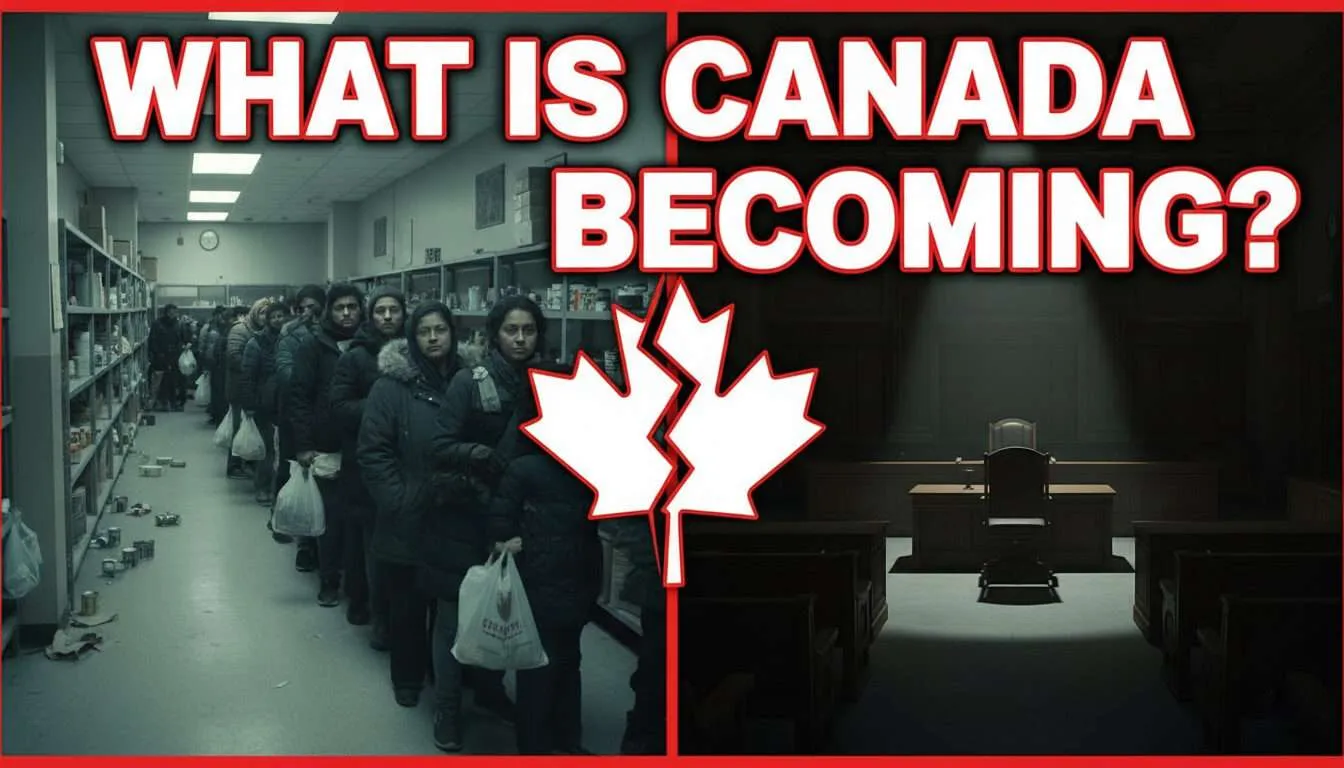
🇨🇦 Canada Isn’t “Broken.” It’s Being Exploited, It’s Canada Immigration Abuse, and Everyone Knows It

I said the last post was the last one of the year. I meant it at the time. Then I saw more footage. More proof. More Canadians are being told to shut up, accept it, and move along.
What you’re reading here is not a collection of random clips. It’s a pattern. And once you see it, you can’t unsee it.
Food safety is ignored.
Food banks are abused.
Fraud was proudly filmed.
Courts are protecting the wrong people.
And every time Canadians point it out, we’re told this is “normal,” or worse, that we’re the problem for noticing.
No. I’m done playing along.
This article exists because too many Canadians feel the same anger and exhaustion, and nobody in power wants to talk about why.
I’m going to talk about it anyway.
📹 Watch the Video That Sparked This Article
The Tim Hortons Moment That Says Everything
It starts small. It always does.
A Canadian orders food at Tim Hortons. He finds hair in it. He looks behind the counter and sees the obvious problem: a worker handling food without a beard net.
That’s not politics. That’s basic food safety.
So the customer speaks up. Calmly. Directly. Like Canadians used to do.
What happens next tells you everything you need to know about modern Canada.
No apology.
No correction.
No accountability.
Instead, the worker gets defensive. Argues. Tries to intimidate. Acts offended for being recorded while breaking health code rules.
And suddenly, the person pointing out the problem becomes the villain.
I keep asking myself: When did standards become optional?
When did expecting basic rules to be followed become controversial?
This isn’t about Tim Hortons. It’s about a system that no longer backs Canadians when they speak up, especially when the truth makes someone uncomfortable.
Food Banks Were Built for Desperation, Not Exploitation

What I saw next made my blood boil.
A three-year-old video from Sydney, Nova Scotia. An Indian YouTuber is secretly filming inside a Canadian food bank. The place is packed with young Indian men and women waiting for food.
Then the tone changes.
The video turns promotional.
Canada is praised.
Free food is showcased.
Viewers are encouraged to come here.
Come to Canada. Leave everything behind. Life will be better. Guaranteed.
And the final insult? The man openly admits he’s eating free food provided by Canadians.
Meanwhile, real Canadians, people who donated, volunteered, and depended on food banks, are watching this system collapse.
Food Banks Canada has already confirmed that demand has exploded nationwide:
https://foodbankscanada.ca/hunger-in-canada/
And yes, donations are dropping. People stop giving when they believe the system is being abused.
That’s not cruelty. That’s human nature.
“I Need It, Not Want It”
One moment from the video hits harder than all the rest.
A Canadian food bank user (ME) speaks directly to the camera. He’s unemployed. On social assistance. Jobs he could do are gone. And now the food meant to keep him alive is disappearing too.
He doesn’t sound hateful.
He sounds defeated.
He says something nobody wants to hear out loud anymore: this makes him angry.
And honestly? That reaction makes sense.
When systems designed for emergency survival turn into recruitment tools, resentment becomes inevitable. Governments created this tension, then blamed Canadians for feeling it.
Fraud Filmed Like a Tutorial
Then we get to the supermarket footage.
A newcomer proudly films himself committing retail fraud in Canada. Not quietly. Not accidentally. Openly. Repeatedly.
He manipulates prices. Exploits systems. Encourages others to copy him.
His entire page exists to teach people how to cheat Canadian businesses.
And I keep asking myself: Why is this tolerated?
Why are Canadians punished for noticing while offenders brag online?
Retail theft costs Canadian businesses billions each year:
The Globe and Mail
Yet enforcement remains weak, inconsistent, and selective.
Standing Outside Parliament, Threatening Canada
One clip crosses a line that should end the conversation entirely.
A man stands outside the Canadian Parliament building and openly threatens to change Canadian culture into the third-world chaos he came from.
That’s not “expression.”
That’s not “free speech.”
That’s a warning.
If a Canadian said that in another country, deportation would be immediate.
Here? Silence. Shrugs. Delay.
Our leaders refuse to draw lines, and the vacuum gets filled by people who don’t respect this country at all.
A Two-Tier Justice System Canadians Aren’t Allowed to Question

This is where it stops being uncomfortable and becomes outright sickening.
The case of Navinder Singh exposes the rot inside Canada’s justice and immigration systems.
He arrived as a temporary foreign worker.
His status was upgraded.
He exploited flagpoling to jump the immigration queue.
Then, border officials found what was on his phone.
I’m not repeating every detail. You heard it in the video. It involved severe abuse. Children. Violence. Content that no civilized society should tolerate for one second.
And yet, he wasn’t deported immediately.
Why?
Because courts showed “empathy.”
Because sentences were crafted to avoid deportation triggers.
Because compassion was prioritized over public safety.
Statistics Canada confirms that serious crimes involving sexual exploitation are rising:
https://www150.statcan.gc.ca/n1/daily-quotidien/230727/dq230727a-eng.htm
And still, eight years later, he remains in Canada appealing deportation on “compassionate grounds.”
Compassion for who?
Immigration Without Enforcement Is Not Compassion, It’s Negligence
Canada has immigration laws. Border enforcement agencies. Courts. Paperwork. Processes.
What we don’t have is will.
The Canada Border Services Agency admits removal backlogs continue to grow:
https://www.cbsa-asfc.gc.ca/security-securite/rem-ren-eng.html
Every delay sends a message: stay long enough, appeal long enough, and consequences fade.
Canadians notice.
Abusers notice faster.
This isn’t diversity. It’s dysfunction.
Why This Makes Canadians Angry, And Why That Matters
If this article made you angry, good.
Anger means you still care.
Apathy is what destroys countries.
Canadians are watching their generosity turned into weakness. Their patience weaponized against them. Their concerns dismissed as offensive.
That ends when enough people say it out loud.
I’m saying it.
Final Word
Canada didn’t become like this by accident.
It happened because Liberal leaders refused to protect systems built on trust. Because criticism was silenced. Because enforcement was treated as cruelty.
We don’t need slogans.
We need standards.
And we need them enforced equally.
Period. End of conversation.
❓ FAQ
Q: Is food bank abuse increasing in Canada?
A: Food Banks Canada reports record demand and declining donations.
Q: Why are deportations delayed in Canada?
A: Appeals, court decisions, and backlog delays allow serious offenders to remain.
Q: Are Canadians allowed to criticize immigration policy?
A: They should be. Silencing criticism worsens public trust.





Leave a Reply