
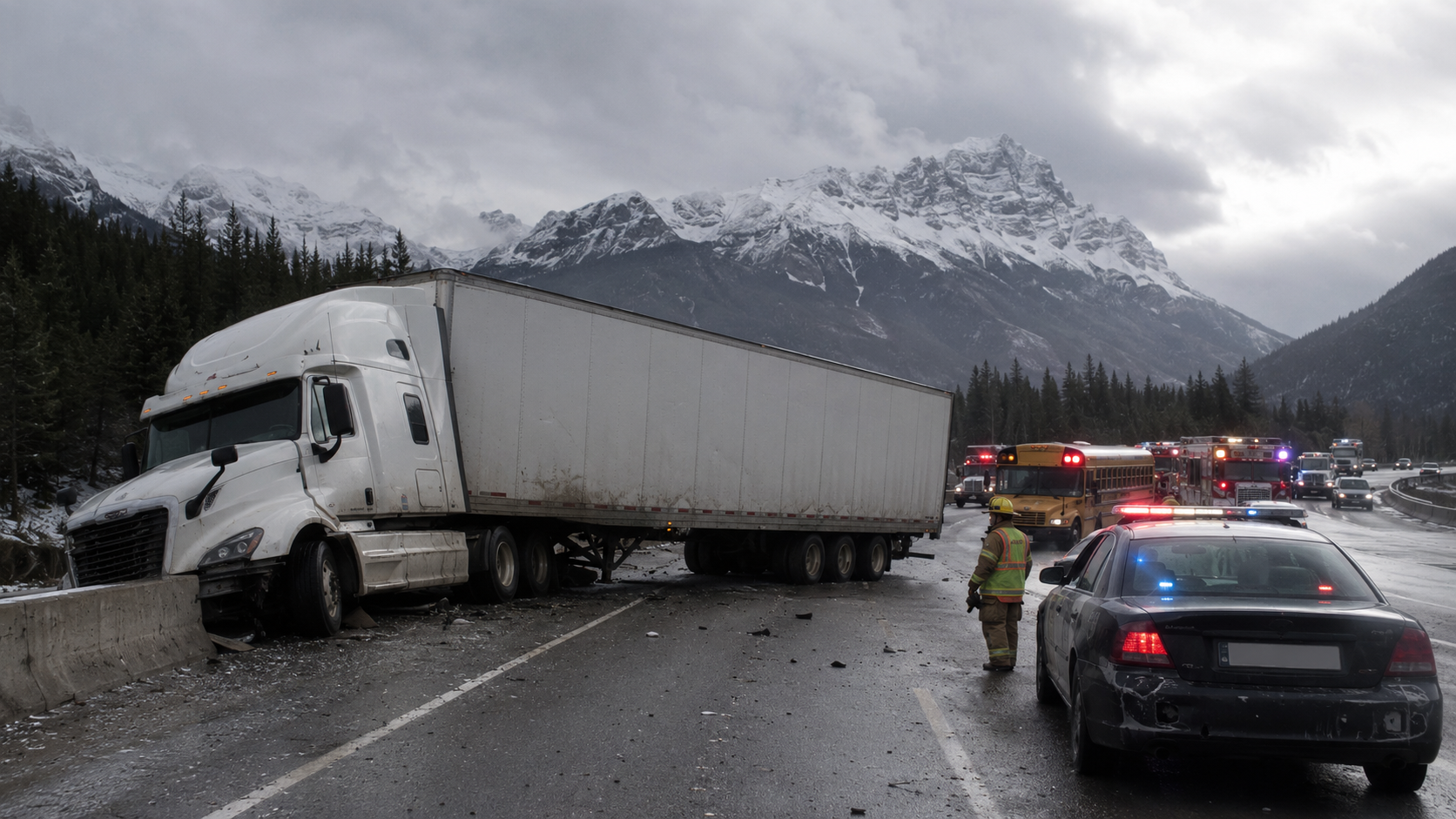

Canada’s Fast Track Experiment is no longer some abstract policy debate happening in Ottawa boardrooms. It is delivering real-world chaos on our highways, in our transit systems, and on the streets of our cities every single day. I have watched the clips and read the reports, and the pattern is impossible to ignore. Truck drivers who cannot communicate basic directions are jackknifing rigs into traffic. Drug shipments hidden in cheese powder are crossing the border while authorities play catch-up. Meanwhile, the TTC is busy debating turtle and bear icons for station exits instead of fixing broken escalators. This is what happens when you fast-track thousands of people into critical roles and sensitive communities without proper vetting or assimilation standards.
The Fast Track Experiment Puts Dangerous Drivers Behind the Wheel

The Fast Track Experiment was sold to Canadians as a solution to labour shortages. In reality, it has become a conveyor belt for risk. At the Blue Water Bridge, a 27-year-old driver named Chandan Tayal was stopped with over 60 kilos of cocaine hidden in two cardboard boxes under the bunk of his truck.
He claimed he was hauling cheese powder and wood pallets from Wisconsin to Brampton and had no idea the drugs were there, even though one package was already open. Police canines confirmed the load. He is now sitting in a Michigan jail while investigators sort out how this slipped through. This is not an isolated customs hiccup. It is the direct result of rushing people into commercial driving positions across borders with minimal scrutiny.
That same pipeline is putting lives at risk on Canadian roads. A 21-year-old driver named Jashanpreet Singh lost control of his semi, jackknifed across the divider, and killed a 58-year-old woman while injuring dozens more, including children. He faced DUI charges. Another driver ignored clear no-truck routes in Whitchurch-Stouffville, got his rig stuck in a farmer’s field, and could not even understand the tow operator’s instructions because he could not read the signs or speak the language. These are not rare exceptions. They are the predictable outcome when you lower the bar to fill seats in big rigs and hand the keys to people who have no business operating 80,000-pound vehicles on our highways.

The most chilling case came on Highway 17 near Spanish, Ontario. A 27-year-old named Rajwant Singh Brar drove his transport truck straight into the back of a stopped school bus carrying 26 children. The stop arm was out, and the lights were flashing. Those kids came within seconds of never making it home.
As reported by The Sudbury Star, Brar was charged with careless driving and failing to stop for a school bus. Local media downplayed the driver’s background in initial coverage. That kind of selective reporting only fuels the frustration ordinary Canadians feel when they see the same patterns repeating. How many more mothers have to get that phone call before we admit the Fast Track Experiment is trading Canadian safety for volume?
TTC’s Animal Wayfinding Obsession While Basics Fail

The Fast Track Experiment does not stop at truck cabs. It has infected our public institutions too. Right now, the TTC is holding serious meetings about “decolonizing wayfinding” by replacing normal exit signs with pictures of turtles, bears, wolves, bison, and beavers. The presenter talked about assigning unique animal icons to major exits so people can navigate by Indigenous placemaking instead of numbers and letters. They want these animals on signs, wall markings, and architectural elements. At the same time, multiple stations still have broken escalators and elevators that do not work. Some do not even have functioning bathrooms. The TTC board sat through this presentation and treated it like a serious infrastructure priority.
Nobody in their right mind thinks animal pictures are a global standard for wayfinding. Every functional transit system on earth uses alphanumeric systems because they are clear, universal, and work for people who speak different languages. Yet here we are, in a city where basic mechanical reliability is already failing riders, debating whether the wolf exit or the turtle exit better honours Indigenous knowledge. This is not progress. This is ideological theatre while the actual system crumbles.
The Fast Track Experiment in immigration has created so much pressure on housing, services, and social cohesion that institutions like the TTC feel they must perform these rituals to stay on the right side of the narrative. It is a distraction dressed up as reconciliation.
📹 Watch the Video That Sparked This Article
Crime and Disorder Spread Under Fast Track Policies
The same cultural disconnect shows up in everyday crime and disorder. In Brampton, a 34-year-old named Suresh Kumaran Rajaputhiran was hiding inside ATM vestibules near Chinguacousy Road and Queen Street East, waiting to rob people as they withdrew cash. One victim was a senior citizen. He now faces multiple robbery charges. This is the neighbourhood-level price of fast-tracking people into communities without any real expectation of shared values or basic respect for Canadian norms.

Out in Penticton, new arrivals thought the streets and even horseback were appropriate venues for sword fights. The video made the rounds because it captured something many Canadians have noticed but been told not to say out loud. Basic rules of public behaviour, noise, cleanliness, and safety appear optional depending on who you are these days. These incidents are not random. They follow directly from the Fast Track Experiment that prioritizes volume over compatibility and turns entire communities into testing grounds for imported behaviours.
The Collapse of Everyday Civility in Canadian Public Spaces
Viral clips keep surfacing of grown men dumping garbage and worse directly into rivers, washing clothes in waterways with soap and detergent that Canadian environmental rules would never allow, or blasting loud music through loudspeakers in public parks while families try to enjoy a quiet afternoon. One clip showed a little girl who brought treats to share, only to watch the entire group swarm and snatch everything from her hands. The look on her face said more than any government statistic ever could.
Even simple commercial transactions reveal the attitude shift. A Subway employee tried charging a customer extra just to toast the bread, something that has always been free. When challenged, the response was defensive and aggressive rather than professional. These are small moments, but they add up. They tell you that the social contract is fraying in real time under the weight of the Fast Track Experiment. Canadians built a country where basic manners and shared rules made daily life predictable and safe. That inheritance is being chipped away one fast-tracked arrival at a time.
Sharia’s Foot in the Door: From Regina to Rural Communities
Then there is the more serious cultural import. In downtown Regina, the Jamia Masjid mosque tested its new rooftop call-to-prayer speaker system, blasting the Islamic call across a Canadian city centre for the first time. A survivor of Sharia law in Iran named Edwin Segoli has been warning North Americans exactly what this trajectory looks like.
He describes three levels: first, they ask for basic rights and tolerance, then you get two-tier policing and parallel legal systems as seen in parts of the UK, and finally you reach the full theocratic control he escaped in Iran, complete with apostasy laws and blasphemy enforcement. He says the same playbook is already visible in Canada through things like M-103 and the protection of certain ideologies from criticism.
When a private community in rural Nova Scotia starts operating like its own mini Khalistan with gates, flags, and signs that make outsiders feel they have left Canada entirely, that is not enrichment. That is the formation of parallel societies; the Fast Track Experiment was never supposed to create. Canadians are watching their country transform in real time while politicians pretend nothing is happening.
Democracy Becomes a Theme Park Under Carney
Green Party Leader Elizabeth May has now said publicly that the current use of time allocation and omnibus bills under the Carney government is the worst she has seen in her entire parliamentary career, spanning multiple prime ministers. She called Ottawa a “democracy theme park” where the buildings still stand, but actual democratic deliberation has left the building. When even opposition voices from the left start sounding this alarm, the rest of us should pay attention. The same government that lectures Canadians about inclusion and reconciliation is ramming through legislation while sidelining debate. That is not leadership. That is the behaviour of people who know they cannot win arguments on the merits.
The Fast Track Experiment could never have reached this scale without the political machinery that protects it from real scrutiny. Carney and his team have turned Parliament into a rubber stamp while the country changes around us.
Even Father’s Day Falls Victim to the Cultural Shift

Even the calendar is under assault. The Toronto Star apparently believes Father’s Day should be abolished because one day to honour dads is too much in a world full of identity months and flag raisings. The same outlets that demand endless celebration of every other group suddenly find traditional Canadian family roles embarrassing or problematic. This is the cultural endgame of the Fast Track Experiment: the steady replacement of the founding stock’s norms, holidays, and expectations with whatever new arrivals and ideological bureaucrats decide is fashionable.
This Is the Heritage Betrayal We Were Warned About
I keep coming back to the same question. What exactly did Canadians sign up for when they accepted the Fast Track Experiment? We were told it would fill labour gaps and enrich the country. Instead, we are getting drug shipments in cheese trucks, school buses nearly wiped out by unqualified drivers, transit systems obsessing over animal icons while basic infrastructure fails, seniors robbed at ATMs, rivers treated like open sewers, and public spaces turned into venues for foreign cultural displays that ignore everyone else. The TTC cannot keep escalators running, but it can hold lengthy meetings about decolonizing wayfinding. Police and politicians seem more worried about hurt feelings than public safety when patterns emerge in crime and disorder.
This is not the Canada I grew up in. It is not the country your kids deserve to inherit. The Fast Track Experiment has accelerated demographic and cultural change at a pace that prevents assimilation and rewards non-compliance. Every one of these incidents, from the border drug bust to the Regina call to prayer to the TTC turtle signs, is a symptom of the same disease: a government that prioritizes volume and political optics over competence, compatibility, and the preservation of the society that actually works.
This chaos is part of the larger betrayal of our heritage that I detailed in my earlier piece on how Liberal policies are betraying Canadian heritage through unchecked inflows and imported values that clash with everything we once took for granted. You can read the full picture here: https://macsopinion.com/canadian-heritage-betrayed/
Canadians are not stupid. We see the clips. We read the names in the police reports. We notice when media outlets suddenly become vague about backgrounds in certain stories. The question is no longer whether the Fast Track Experiment is working. The question is how much more disorder, danger, and cultural fragmentation we are willing to accept before we demand that it ends. The Canada built by European founding stock, the rule of law, and basic civic expectations is worth defending. Right now, that inheritance is being gambled away one fast-tracked decision at a time.
❓FAQ Section
What is Canada’s Fast Track Experiment?
It refers to the accelerated immigration and work permit programs that fast-track large numbers of people, particularly from India, into Canada for labour shortages in trucking, services, and other sectors with reduced vetting and assimilation requirements.
Why are there so many truck accidents involving foreign drivers recently?
The combination of rapid licensing, language barriers, and lower standards under fast-track policies has put unqualified drivers behind the wheel of commercial vehicles, leading to incidents like the Highway 17 school bus collision and the Blue Water Bridge drug smuggling case.
What is the TTC doing with animal signs for wayfinding?
The TTC is considering replacing standard alphanumeric exit signs with pictures of turtles, bears, wolves and other animals as part of an “Indigenous placemaking” project to decolonize navigation, even while many stations suffer from broken escalators and elevators.
Is Sharia law coming to Canada?
Warning voices, including survivors of Sharia in Iran, point to creeping parallel systems, amplified calls to prayer in city centres like Regina, and political reluctance to enforce uniform Canadian law as early warning signs of the same pattern seen in the UK.
How does this connect to Canadian heritage?
Unchecked fast-track immigration is accelerating demographic replacement and cultural fragmentation, betraying the European founding stock that built Canada’s institutions, rule of law, and civic norms, exactly as detailed in my earlier article on the betrayal of Canadian heritage.




Leave a Reply