

Mark Carney’s Asylum Claimants Hotel Costs Are a Slap in the Face to Every Working Canadian
I watched the latest Mac’s Opinion video and the anger landed immediately. The clips show people treating ordinary Canadians like garbage, and the official numbers behind them make the insult worse. Mark Carney and the Liberals continue running a system that hands hotel rooms and meals to asylum claimants while Canadians who paid into the system for decades fight for basic groceries. This is not compassion. It is a deliberate choice that treats taxpayers as an afterthought.
The Video That Shows the Daily Reality
The footage does not need extra commentary to land. One segment shows a man speaking to a woman the way he would back in his home country. Another captures a senior Walmart worker nearly being assaulted until bystanders step in. A Canadian man films people illegally dumping trash beside a commercial building; they immediately turn aggressive and claim they are the ones being harassed. The same pattern appears with flowers taken from graves. These are the behaviours ordinary people now encounter on a regular basis.
📹 Watch the Video That Sparked This Article
Asylum Claimants Hotel Costs Laid Bare by Official Documents
An official government reply from 2024 confirmed the scale of the spending. Conservative MP Lianne Rood forced the figures into the open. The National Post reported that asylum claimants in IRCC-operated hotels were budgeted at $140 a night for a room plus $84 a day for meals, for a total of $224 per person every single day. That works out to more than $81,000 a year. Extra items such as toiletries, medicine, and diapers sat on top of the base amount. The reply stated that claimants received the package regardless of how they entered the country.
I compared that figure with what many Canadians receive. Social assistance in multiple provinces lands around $800 a month for rent, heat, and utilities. People on those rates like me are lucky to scrape together $80 for groceries and still rely on the food bank. The same government that cannot raise those rates to a liveable level was writing cheques equivalent to ten times the monthly Old Age Security top-up for some seniors. The contrast is not an accident.

Later data showed the daily cost falling to roughly $195, yet the principle never changed. Ottawa still spent more than a billion dollars on hotel rooms for asylum claimants since 2017. Niagara Falls alone accounted for nearly $115 million for almost 5,000 people in one year, with average stays exceeding 100 days. Carney inherited the program and kept the pipeline open long enough for the bills to continue. Asylum claimants hotel costs of this magnitude remain a direct transfer from working Canadians to people who have contributed nothing.
Food Bank Crisis Canada Shows Who Pays the Price

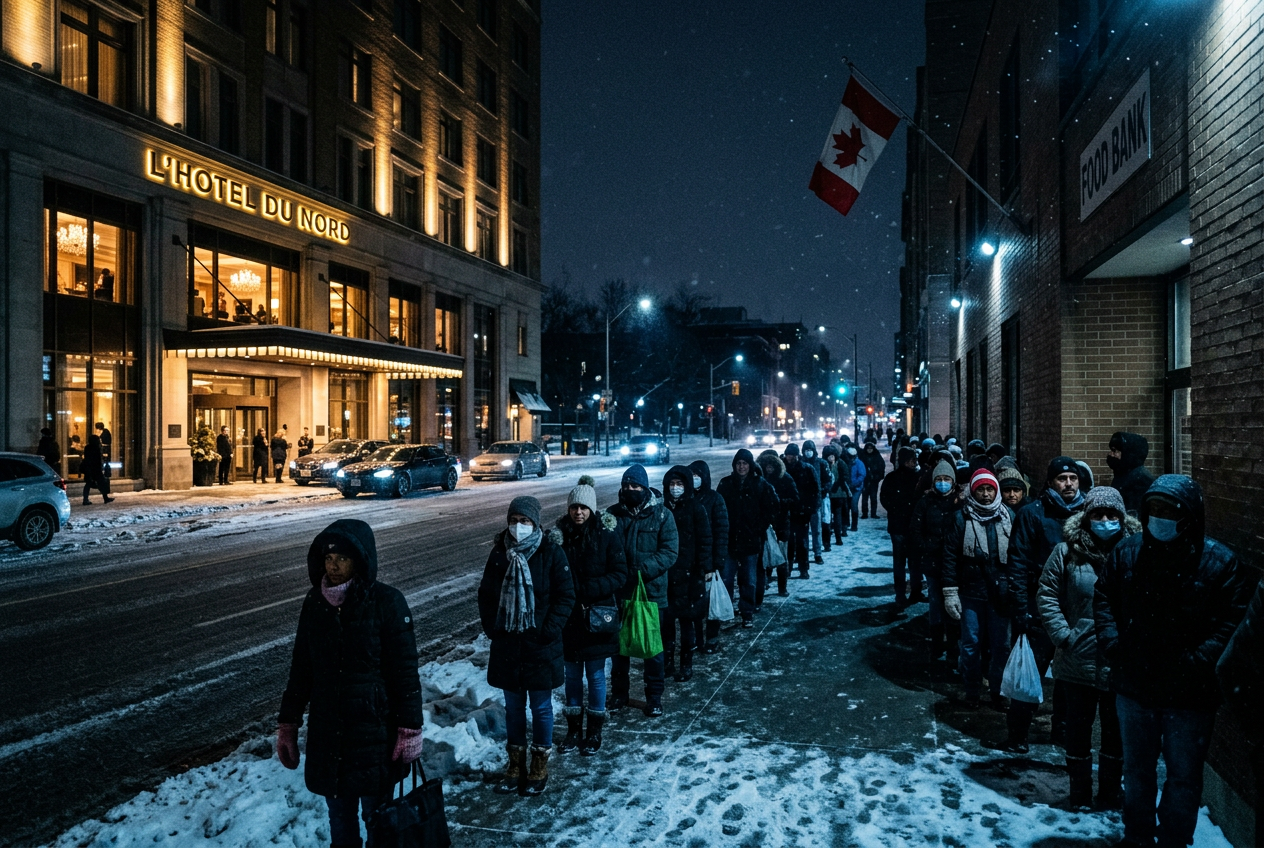
Food Banks Canada’s 2025 HungerCount documented nearly 2.2 million visits in a single month, double the number recorded in 2019. The National Post highlighted that newcomers who have been in Canada ten years or less now make up roughly one-third of clients, a 161 percent increase from six years earlier. Employment does not solve the problem for everyone. Companies continue to hire recent arrivals at lower wages while some job postings still demand Hindi or Punjabi. That requirement is illegal under Canadian human-rights law, yet it persists because enforcement remains weak.
I speak with Canadians like myself who have worked here their entire adult lives and cannot find steady shifts. They watch the labour market absorb large numbers of new arrivals while their own applications go unanswered. Housing wait lists stretch for years. The people who built the system are told there is no capacity, while temporary hotel rooms are booked by the thousands. Asylum claimants hotel costs of $224 a day are not abstract. They are money that never reaches the food banks, the social-housing units, or the disability rates that Canadians actually use.
Irregular Border Crossers and the Culture of Entitlement
The video records the friction that follows high-volume arrivals. In one court exchange, an Indian man is asked whether he was born in Nepal. He admits he told U.S. authorities he was born there. When the judge points out the contradiction, he replies that it is not a lie. It is culture. “We learn to talk and act this way from childhood.” I have no interest in pretending that statement is normal or acceptable inside a Canadian immigration system that depends on truthful information.
Another clip shows a photo-counter dispute. The customer expects the Canadian clerk to accept treatment that would be directed at a lower-caste worker in India. Caste does not exist here. The person behind the counter is not required to endure the abuse. Multiculturalism was sold as mutual respect. In practice, it has become one-way tolerance for behaviours that ordinary Canadians are expected to absorb without complaint.
A passenger has to instruct a taxi driver to stop watching videos on his phone while the vehicle is moving. The passenger remains polite. Most people I know would have recorded the entire interaction and sent it to both the company and the police. These are the daily experiences that produce the fatigue the Liberals dismiss as bigotry. Canadian taxpayers’ burden is not an abstract slogan. It is the concrete result of policies that prioritize volume over integration and enforcement.
Saskatchewan NDP MLA and the Lecture Canadians No Longer Accept
Saskatchewan NDP MLA Tajinder Grewal, who immigrated from India in 1999, rose in the legislature to complain about rising anti-immigrant sentiment. He listed Facebook comments telling him to go back and framed legitimate questions about rapid demographic change as hatred. After more than twenty-five years in the country, he still struggles with clear English. That is his right. It does not create an obligation for Canadians to pretend that scale does not affect language, public services, or community cohesion.
Canadians are allowed to ask why immigration levels remain high while housing, healthcare, and food banks are under strain. They are allowed to notice patterns in the video clips and in their own neighbourhoods. Grewal’s response is to treat the noticing itself as the problem. That is the standard NDP and Liberal approach. Taxpayers are expected to fund the system, absorb the consequences, and remain silent when they object.
Mark Carney’s Priorities Remain Foreign and Symbolic
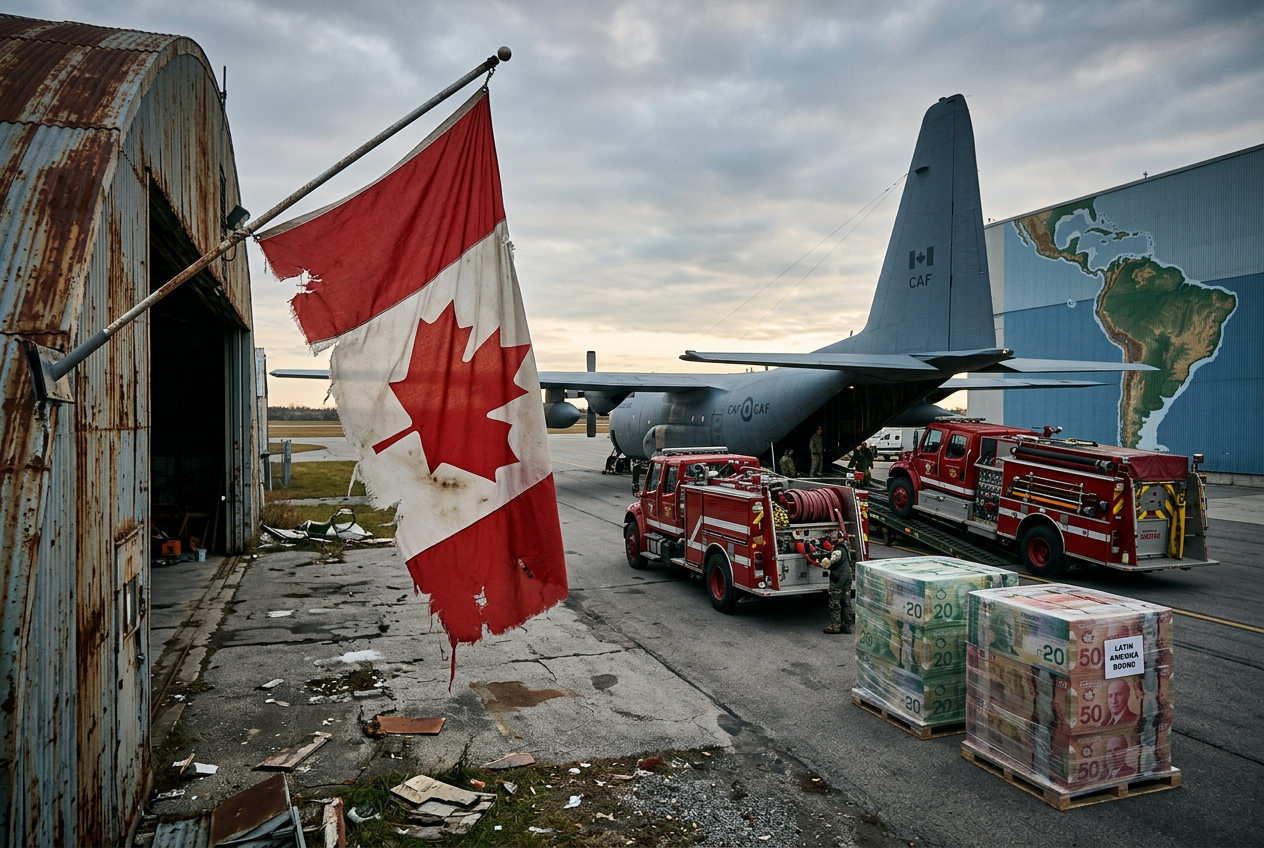
While Canadian food banks set records, Carney’s government still finds money for overseas gestures. I previously detailed how the government sent $19 million in firefighting aid to Latin America instead of directing equivalent resources to Canadian communities that needed the equipment and personnel. The pattern is consistent. Domestic shortages take a back seat to international signalling. The same administration that booked entire hotels for asylum claimants continues to treat foreign aid as a higher priority than the people who pay the taxes.
The broader Liberal record sits in one place for anyone who wants the receipts. Every major Liberal Party of Canada scandal, from SNC-Lavalin through ArriveCan and the endless ethics breaches, is documented in a single compilation. Carney did not create the culture. He inherited it and has shown no interest in dismantling it. His recent immigration numbers continue to hide large one-time pathways. Fraser Institute analysis shows the real permanent-resident intake for 2027 can reach approximately 662,000 once the extra measures are counted, far above the advertised 380,000 headline figure.
What Working Canadians Are Left Holding
I am not interested in abstract arguments about global migration flows. I am interested in the concrete results for the people who built the country. They face undercut wages, longer waits for medical care, and the daily experience of being told their concerns are illegitimate. Asylum claimants hotel costs of $224 a day represent a political choice. That choice says newcomers who have contributed nothing to the system receive priority housing and meals while Canadians who paid taxes for decades line up at food banks.
The video ends by asking what a passenger should do when a driver is watching videos on a phone. Most of the Canadians I hear from would have been far less restrained. Fatigue is not racism. It is the rational response to a government that treats its own citizens as second-class. Mark Carney can keep talking about deeper alliances with Europe and global leadership. The hotel invoices, the food-bank numbers, and the clips of daily disrespect tell the actual story of what his government is delivering inside Canada.
❓FAQ
How much did the government budget per day for some asylum claimants in hotels?
Official documents from 2024 listed $140 per night for hotel rooms and $84 per day for meals, for a combined $224. Later figures showed a modest reduction, but the overall program still exceeded one billion dollars.
Did the $224 figure apply only to irregular border crossers?
No. The government response stated that claimants in IRCC-operated hotels received accommodations and meals regardless of how they entered Canada.
What do the food-bank numbers show about recent arrivals?
Food Banks Canada’s 2025 HungerCount recorded nearly 2.2 million visits in one month, double the 2019 level. Newcomers in Canada for ten years or less account for about one-third of clients.
Has the hotel program ended under Mark Carney?
Funding for the remaining federally booked hotel rooms was scheduled to end in late 2025. The broader immigration intake, including large one-time permanent-resident pathways, continues at elevated levels.
Why do ordinary Canadians object to these policies?
Because the same government that cannot house or feed its own citizens at adequate levels continues to allocate large sums to temporary housing for recent arrivals while domestic food-bank use hits records and wages face downward pressure.



Leave a Reply