

TRANSCRIPT:
Pip: Mac’s Opinion has been watching Canada’s immigration debate with the kind of intensity usually reserved for a Stanley Cup game — except nobody’s celebrating at the end.
Mara: Today, we’re working through a post that covers a lot of ground: cultural clashes, foreign separatist activity on Canadian streets, a nomination race that rattled Ontario Liberals, and the economic squeeze ordinary families are feeling.
Pip: Let’s start with what the post is actually arguing.
Canada’s Immigration Reckoning
Mara: The post opens by framing this as a long-running alarm that keeps getting louder — the claim is that mass immigration without integration planning is transforming communities faster than policy can respond.
Pip: And the post doesn’t ease you in gently. Here’s the line that sets the tone: “From sacred rat temples to foreign separatist marches on our soil, ethnic voting blocs hijacking nominations, and incompatible cultural clashes in everyday stores, the invasion is real.”
Mara: That framing drives the rest of the piece. The practical stakes the post is making are about housing, healthcare, and employment — federal warnings about population growth outpacing construction were apparently ignored, and the post ties that directly to record food bank usage and ballooning wait times.
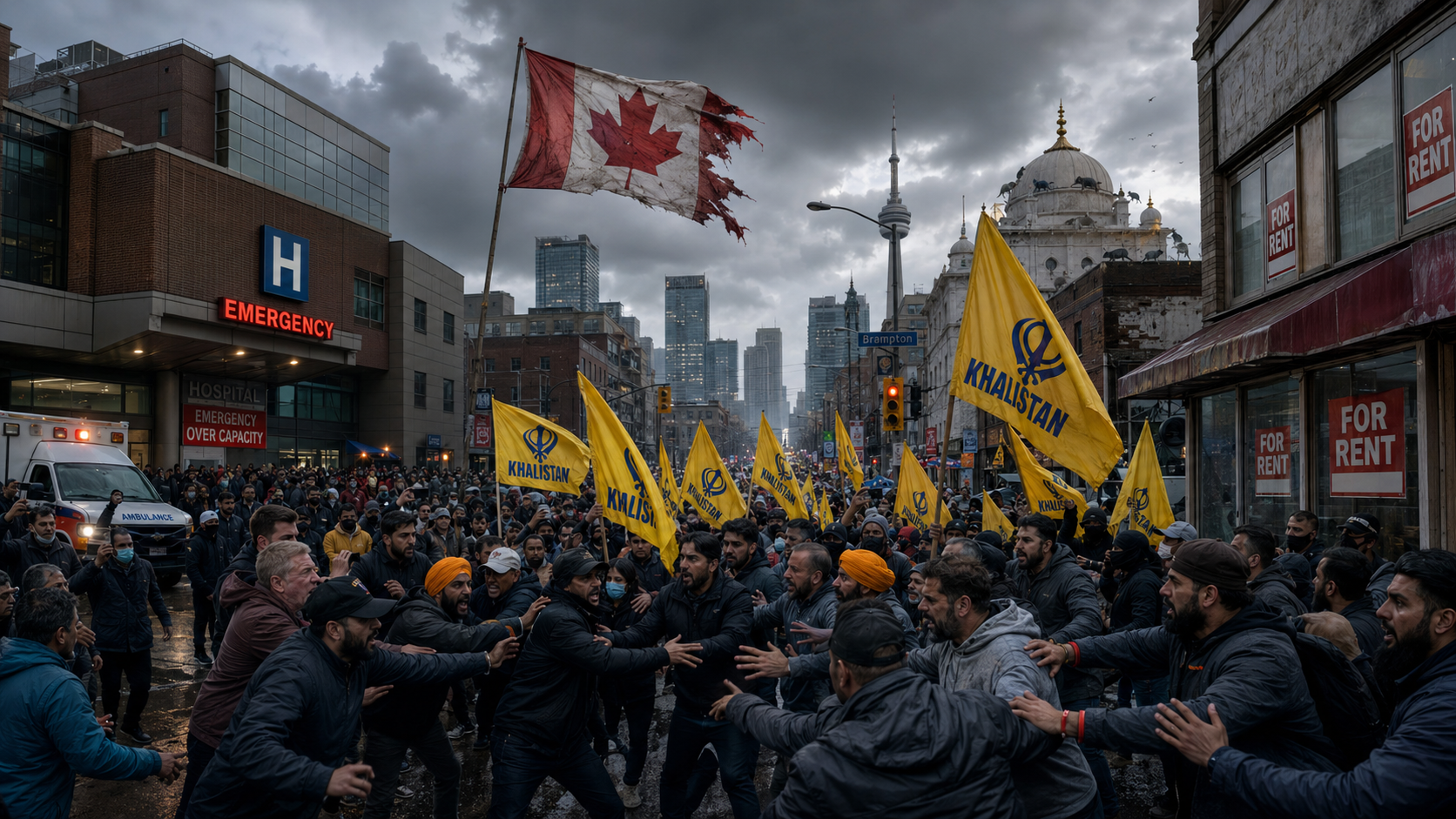
Pip: The Khalistan section is where the post gets into security territory, specifically. Thousands marching in Calgary under Khalistan flags for a foreign separatist movement, and the post notes CSIS has formally flagged this as a national security concern — not a fringe worry, an institutional one.
Mara: The post draws a line between free expression and what it calls supporting violence abroad or intimidating Canadians, and argues that line isn’t being enforced.
Pip: Then there’s the Ontario nomination story, which is genuinely striking regardless of where you land politically. Nate Erskine-Smith — endorsed by Mark Carney — lost by nineteen votes to a largely unknown candidate in Scarborough Southwest, in what the post describes as a heavily Bangladeshi-dominated riding.
Mara: The post’s read on that outcome is blunt: ethnic voters chose the ethnic candidate, and it uses that result to argue that bloc voting is now a structural feature of Canadian politics, not an anomaly. The post also flags a Walmart clip from the United States as a preview of cultural friction showing up in retail spaces here, too.
Pip: And to its credit, the post ends with a concrete list — pause intake, prioritize skilled immigrants, restrict party membership to citizens, enforce integration, build housing first. Whatever you think of the diagnosis, there’s a prescription attached.
Mara: The economic thread running underneath all of it is youth unemployment, temporary foreign workers displacing domestic workers, and inflation driven by demand outpacing supply. The post calls it unsustainable, and those are numbers worth examining seriously.
Pip: The stakes the post is drawing are about what Canada looks like in a generation — and whether the people making those decisions are accountable to Canadians.
Mara: That question of accountability — who policies actually serve — is worth sitting with.
Pip: Immigration policy, security flags, nomination upsets, housing costs — this one covered real ground.
Mara: The through-line is accountability: who bears the costs of policy decisions and who answers for them. More ahead in the next episode.

Leave a Reply