


Tim Hortons used to mean something simple: a double-double, a plain donut, and the feeling that the place at least tried. Now the flies on the counter feel like part of the branding. The coffee comes with a side of mystery protein, and nobody seems shocked anymore. It is the same shrug I see from the people running the country. Standards drop, prices climb, and the response is always the same shrug. Welcome to the everyday nonsense that sits on top of the political mess. Falling standards, government excuses, self-dealing, and city leaders carving out special months while ordinary Canadians scrape by.
The pattern is impossible to miss once you watch how the top of the file handles basic questions. But remember, Mark Carney just got here, though.
📹 Watch the Video That Sparked This Article
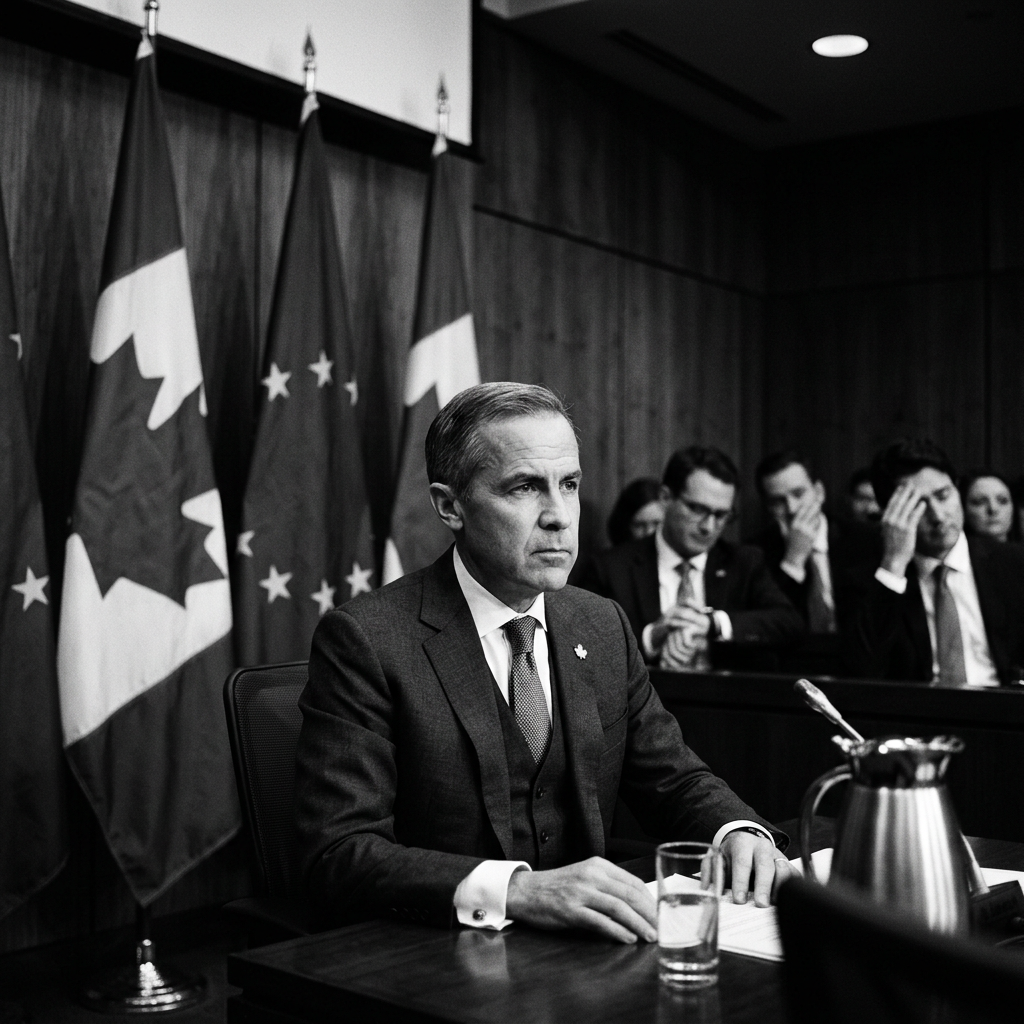
Pierre Poilievre stood up and asked why Habitat for Humanity found that more Canadians have given up on homeownership than people in any of the other 22 countries they surveyed. The answer that came back was the one that has become the default. He just got here. The Liberals only showed up over a decade ago. Sit there, keep waiting, and keep paying. If you still disagree after hearing the numbers and the record, you are out of touch with the reality most of us live in every day.
Carney Just Got Here While the Housing Dream Dies
Housing is a domestic problem. One hundred percent of the land, one hundred percent of the workers, and ninety percent of the materials sit right here. It is tariff-proof and Trump-proof. That is why the usual foreign excuses do not fit. Instead, we get the new one. Carney just got here. He has been Prime Minister for a year and a half. Most of the front bench has been there for eleven years. They doubled housing costs and still claim they just arrived.
Habitat for Humanity’s survey of more than thirty thousand people across twenty-two countries put Canada at the top of a list nobody wants to lead. 56% of Canadian non-homeowners say they can never expect to own a home. That is more than double the global average of 23% and higher than the United States, the United Kingdom, and Australia. Canadians are the most likely in the developed world to give up on ownership. Pedro Barata of Habitat for Humanity Canada called it an opportunity crisis. People sacrifice food, savings, and peace of mind just to keep a roof, so they never get ahead.
I covered the broader pattern of promises that never turned into keys in my earlier look at Carney’s first-year failure. The same numbers keep showing up. Starts sit in the low-to-mid 200,000s while the country needs far more. Build Canada Homes has first-year units under construction against targets that were always more than 200,000; so none of it is his problem.
Two-thirds of Canadians made at least one financial sacrifice last year to cover housing. 81% say rising costs make ownership harder. 73% say there are too few affordable homes to buy. The main barriers are the obvious ones: homes too expensive, incomes too low, and not enough saved for a down payment. None of that is fixed by reminding the opposition that the Prime Minister only arrived 18 months ago.
Gas, Groceries, and the Affordability Crisis Nobody Will Name

Gasoline prices have climbed hard. Statistics Canada shows year-over-year increases that leave us paying more per litre than drivers across the border. Diesel sits even higher relative to the world average. Only parts of Europe pay more. Much of that increase shows up in grocery aisles because the trucks that move food run on the same fuel. Happy Thanksgiving turns into an unpleasant trip past the prices of the things that used to be ordinary.
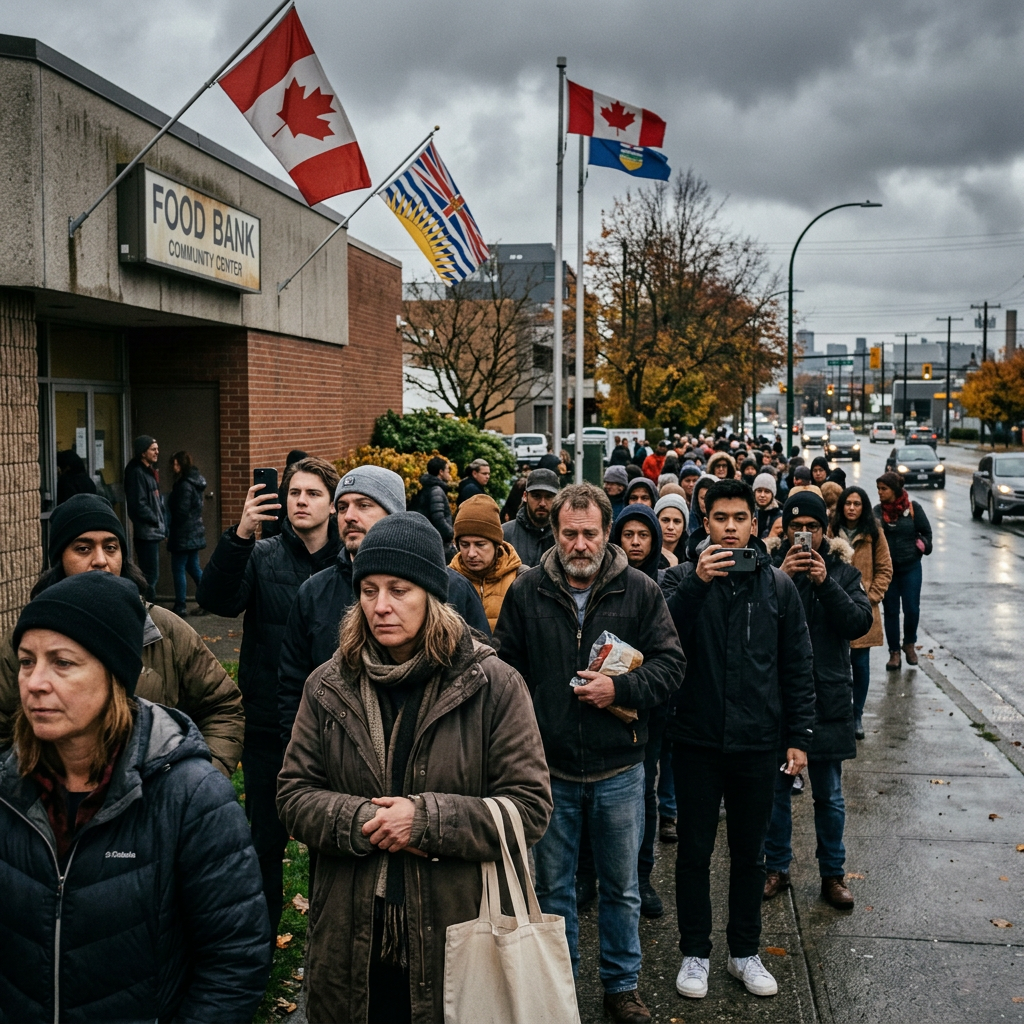
Food banks tell the rest of the story. One in three food banks and shelters are turning people away because they have run out of food or resources. A national survey found 89% of organizations saw rising demand, 35% turned people away, and average waitlists hit hundreds of people. One in four shelters send people back onto the street. Working families who never expected to need help are now in line. Carney looked Canadians in the eye on day one and said Judge him by the prices at the grocery store. The judgment is in. People are cutting back.
He still says he just got here. The world is more divided and dangerous, judges repeating, as if that sentence explains why a family cannot afford the turkey or the gas to visit relatives. Housing is 100% Canadian. Grocery inflation has outpaced the overall CPI for months at a stretch. None of it requires a foreign villain. It requires a government that has been in power long enough to own the results.
The Heat Pump Program and the Brookfield Cash Machine

Andrew Lawton and others laid out the conflict on the two-billion-dollar heat pump program. The Environment Minister will not touch the facts. She talks about two thousand to ten thousand dollars per homeowner, average savings of fourteen hundred a year, and applications answered in twenty-four hours. She skips the part where the Prime Minister’s ethics filings show holdings in Trane Technologies and where Brookfield owns Enercare.
Carney’s $2 billion heat pump rebates face conflict-of-interest questions over Brookfield ties and past investments in manufacturers. Brookfield Infrastructure bought Enercare years ago. There is a partnership history with Trane. The Prime Minister’s disclosure listed hundreds of companies, including heat-pump-related ones, later placed in a blind trust. Conservatives asked how much he and Brookfield stand to make off taxpayer money. The answer was silence and more heat-pump-related talk about the program itself.
I am fine with heat pumps if they actually lower bills for real Canadians in our winters. I am not fine with the same person who says he just got here using the job to line the pockets of the firm he used to help run. This is the pattern. Deliver for insiders. Tell everyone else the clock just started.
Local Politics, Diploma Claims, and Special Months
The same carelessness shows up closer to home. Baljinder Singh Nihal is running for city councillor in Brampton after fifteen years in the country. He talks about a background in mechanical engineering. His campaign site claims a Bachelor of Technology from Centennial College. Centennial’s mechanical programs are diplomas and advanced diplomas, not university degrees. India has diploma mills. Pretending a college credential is a degree is not a small detail when you want to manage public money.

NDP figures like Niki Sharma once posted about the “unbearable whiteness” of local election results. That is what it looks like when someone finds a skin colour unbearable. Mark Carney has floated risk-management talk around a US invasion of Canada. Fear and division get more airtime than the actual numbers on food banks and housing starts.

In Calgary, Mayor Jeremy Farkas proclaimed 2026 as Canadian Islamic History Month. He spoke about contributions to education, health care, business, and the arts, and about diversity that enriches communities. Farkas proclaimed this on behalf of the council and Calgarians. France and the UK have shown what happens when leaders elevate one group while treating the country’s actual heritage. Christian heritage and founding culture get the apology treatment. Leaders should unify around shared values, not carve out special months for every identity. Veterans Month would do more for national identity than this.
These are not isolated stories. They are the same habit. Lower the standards, invent new excuses, reward the connected, and lecture everyone else about how recently the current crew arrived.
What Ordinary Canadians Are Left With
Still cannot afford groceries. Still cannot buy a home. Food banks turning people away. Gas and diesel that cost more here than across the border for reasons that are not solely world prices. A Prime Minister whose answer to the worst homeownership pessimism in the surveyed world is that he just got here. A heat-pump program that happens to touch companies connected to his old firm. City leaders who treat heritage as a menu of identity months.
The Liberals have been in power long enough that the “just got here” line has an expiry date. Most of the cabinet has been here for a decade. Housing costs doubled on their watch. Grocery prices climbed. Food-bank demand exploded. The real-world impact is measured in families who cut meals, young people who stop looking at listings, and seniors who skip heat in the winter.
You have to recognize a problem before you can fix it. Calling the current situation an affordability crisis is the minimum. The fix is to stop the self-dealing, stop the excuses, and start measuring success by whether ordinary Canadians can afford the basics. Carney just got here is not a plan. It is a way to avoid owning the record.

If you voted for this and still think the numbers do not matter, ask what you are actually defending. The flies on the Tim Hortons counter are a small version of the same indifference. Standards fall. Prices rise. The people in charge act surprised and remind you they only recently took the job. Ordinary Canadians are the ones left holding the bill.
The record is public. The survey numbers are public. The ethics filings are public. The food-bank survey is public. None of it requires a foreign crisis to explain. It requires a government that has been here long enough to be responsible for the results. Carney just got here does not change the receipt at the grocery store or the listing price that stays out of reach.
❓FAQ
Why does Mark Carney keep saying he just got here on housing and affordability?
He has used the line when asked about Habitat for Humanity’s finding that Canada leads 22 countries in non-homeowners who have given up on ownership. It shifts blame away from a year-and-a-half in office and a decade of Liberal government while housing costs doubled and food-bank demand surged.
What does the Habitat for Humanity survey actually show about Canadian homeownership?
Fifty-six percent of Canadian non-homeowners do not expect to ever own a home, more than double the 23 percent global average across 22 countries and higher than the US, UK, and Australia. Affordability barriers, low incomes, and insufficient down-payment savings are the main reasons cited.
Is there a real conflict of interest with the federal heat pump program?
Ethics filings showed holdings in companies including Trane. Brookfield owns Enercare, a major installer and financer of heat pumps. Conservatives have asked how much the Prime Minister and Brookfield stand to gain from the $2 billion in taxpayer-funded rebates. The government has focused on program details instead of the filings.
How bad is the food-bank situation right now?
A survey of more than 1,600 organizations found 89 percent saw increased demand, 35 percent turned people away, and average waitlists ran into the hundreds. Working families are showing up in larger numbers. This tracks with grocery price increases that have outpaced overall inflation for extended periods.
What is the problem with proclaiming Canadian Islamic History Month in Calgary?
Mayor Jeremy Farkas did so on behalf of council while speaking about diversity that enriches communities. Critics note the pattern across the West of elevating specific identity groups while treating the country’s Christian and founding heritage as something to downplay. Shared Canadian values get less emphasis than special months.



Leave a Reply