
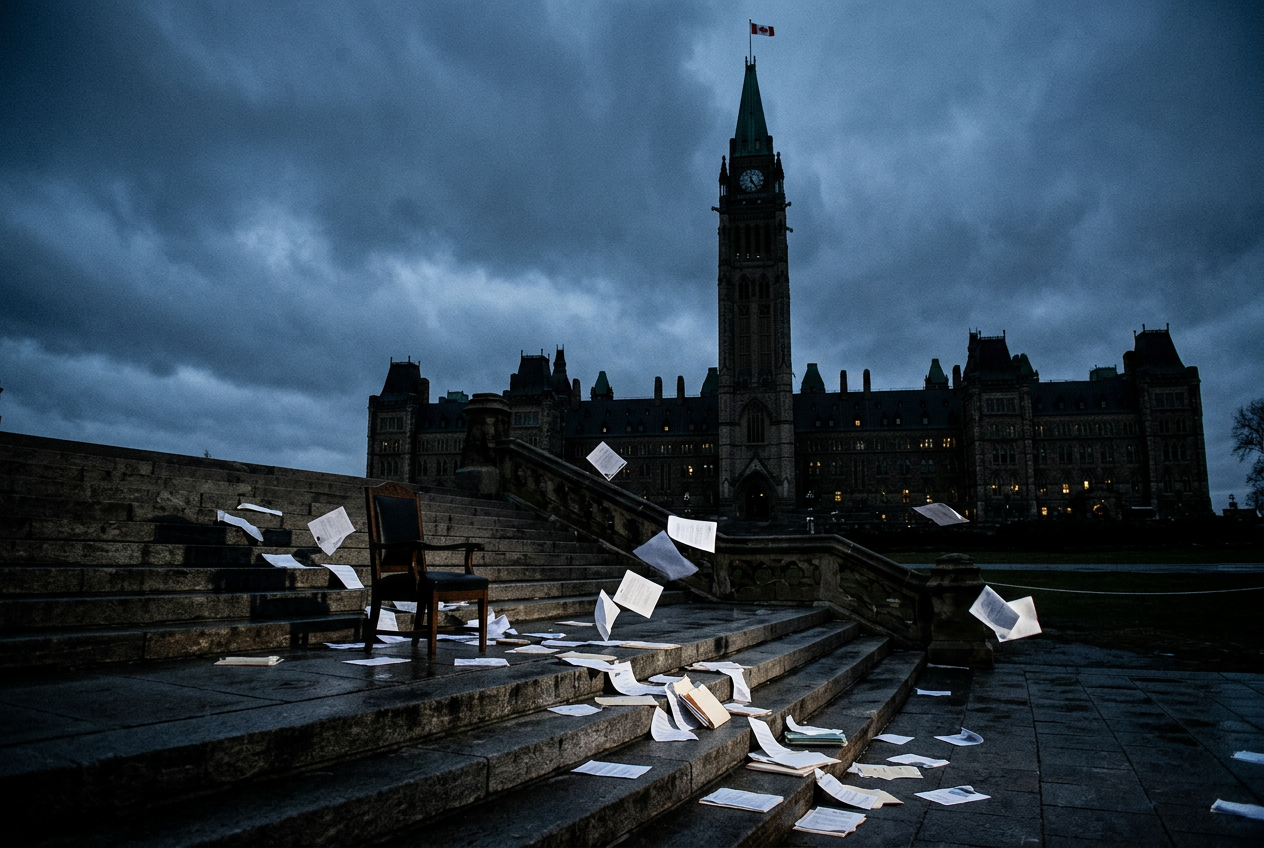

I watched the latest numbers land and felt the familiar knot in my stomach. Mark Carney keeps selling Canadians a story of competence while the ground shifts under ordinary families. Massive immigration arrives without the infrastructure to match it, record spending piles up debt that produces nothing lasting, and the long-promised real deal with the United States never materializes while the government chases other fantasies. Poverty and unemployment keep climbing, crime remains a daily worry for too many neighbourhoods, and the list of convenient conflicts of interest only grows. I keep asking myself how long the mainstream media can treat Mark Carney like an untouchable genius who can do no wrong.
The receipts are right there if anyone bothers to look. His wife lands the newly created Ocean Envoy role with the special access that comes from being married to the prime minister. A multi-billion-dollar satellite contract goes to a longtime friend at Telesat. A $2 billion heat pump programme stands to benefit the very Brookfield connections he left behind. Mark Carney is failing Canadians, and the pattern is getting harder to ignore.
Mark Carney and the Untouchable Media Narrative
I remember when Mark Carney first arrived on the political scene. The coverage treated him like the adult in the room who would finally fix the mess. Columnists called him the steady hand, the global expert who would restore credibility after years of Liberal drift. Ordinary Canadians were supposed to feel relieved. Instead, many of us felt the same unease we feel when a salesman promises the world and then delivers the fine print.
That narrative has hardened into something closer to protection. When questions arise about ethics screens or personal connections, the coverage often frames the concerns as partisan noise rather than basic accountability. I keep waiting for the same outlets that hammered previous governments to apply equal scrutiny here. So far the double standard holds. Mark Carney walks through press conferences while the harder questions get soft treatment or get buried altogether.
The real cost shows up outside Ottawa. Families in mid-sized cities watch rents climb, and grocery bills stretch further. Young people delay leaving their parents’ basements because full-time work remains scarce. Those stories rarely lead the national conversation the way they should.
Immigration Without the Infrastructure to Match It
The Liberal sales pitch on immigration always sounded the same. Bring in more people, grow the economy, fill the jobs. What they left out was the basic math on housing, hospitals, transit, and schools. I have watched communities absorb rapid population growth while the infrastructure lagged years behind. The result is longer wait times, overcrowded emergency rooms, and rental markets that squeeze working families.
Recent numbers show the unemployment rate sitting at 6.7% in October, with private-sector job losses continuing and youth unemployment climbing into the teens. At the same time, the government still talks about hundreds of thousands of new permanent residents. You cannot flood the labour market while the housing starts stay modest and expect wages and living standards to hold. Ordinary Canadians feel the squeeze every month when the rent comes due, or the grocery total jumps again.
I have spoken with people who moved here for opportunity and now struggle to find stable work that covers basic costs. The promise was prosperity. The delivery has been competition for scarce housing and jobs that do not pay enough. That is not compassion. That is policy that fails both newcomers and the people already here.
Record Spending, Rising Debt, and the Missing US Deal
Every budget arrives with fresh announcements and fresh borrowing. The spending keeps climbing while the productivity results stay thin. Interest costs alone now consume money that could have gone to hospitals or tax relief. I keep hearing the claim that this is investment for the future. Then I look at the deficit numbers and the slow growth in real incomes and wonder where the payoff is.
The failure to land a durable deal with the United States hurts even more. Negotiations collapsed over last-minute demands on autos, steel, aluminum, and sovereignty issues. Mark Carney walked away, saying the terms would destroy key industries. The tariffs that followed hit Canadian exporters and the workers who depend on them. Chasing other trade fantasies while the largest partner remains unsettled is not strategy. It is distraction.
Look at the Stellantis Brampton situation. The plant faces an uncertain future while local workers and suppliers wait for concrete commitments. The Stellantis Brampton closure fallout shows what happens when federal priorities drift away from protecting Canadian manufacturing jobs. Families in that community are left hoping someone in Ottawa still cares about the plants that built their towns.
The Ocean Envoy Appointment and Special Access
Diana Fox Carney was named Canada’s first Ocean Envoy and chair of the Our Ocean Conference set for Halifax. The role is unpaid, the government says, and she brings genuine expertise on climate and development issues. That part is not in dispute. What stands out is the timing and the access that comes with it.
She has spoken openly about the doors that open because of her husband’s position. Special access to conversations and opportunities is exactly what ethics rules exist to manage. When the prime minister’s spouse receives a high-profile international role tied to Canadian hosting duties, ordinary Canadians are entitled to ask whether the appointment process was as arm’s-length as the press releases claim. The CBC reported the appointment without much probing of those questions.
I do not begrudge anyone a chance to contribute. I do mind the pattern of convenient placements that always seem to land near the people closest to power. The media treatment of this one has been notably gentle.
The Telesat Satellite Contract and a Longtime Friend
The $2.3 billion military satellite contract awarded to Telesat for Arctic communications has drawn the sharpest questions. Telesat CEO Dan Goldberg is a longtime friend of Mark Carney. The two have known each other for roughly two decades, ran a marathon together, and Goldberg attended the cabinet swearing-in. Conservatives have asked the ethics commissioner to examine whether an ethics screen should have covered the company and the CEO.
Carney’s existing screen lists more than a hundred companies, mostly tied to his Brookfield past. Telesat is not on it. The government and the company insist the process ran at arm’s length and that Carney had no involvement in the decision. Goldberg has said he never asked for special treatment. Those statements are on the record. The questions remain because the relationship is public and the contract is large.
CBC has covered the Conservative calls for a probe. Canadians watching the exchange are left to decide whether the friendship required a formal screen or whether the assurances are enough. When the same prime minister has promoted Telesat as the alternative to other satellite providers, the optics get heavier.
Brookfield Connections and the $2 Billion Heat Pump Programme
The $2 billion national heat pump rebate programme announced in October aims to help hundreds of thousands of households switch systems and cut energy bills. On paper, it sounds practical. The conflict questions arrived almost immediately. Conservative MPs pointed to Carney’s previous disclosures of interests in heat pump manufacturers and to Brookfield-owned companies such as Enercare and Trane that finance and install the equipment.
Carney still holds deferred stock units and options whose value moves with Brookfield. A larger heat pump market can raise the value of those assets. The prime minister’s office has not denied the holdings. Instead, the defence is that the programme is open to any eligible installer and that the goal is lower bills for Canadians. That does not erase the personal financial interest that sits in the background.
Western Standard reported the ethics questions raised in the House. Ordinary homeowners trying to replace a broken furnace do not need another layer of doubt about whether the rebate programme also enriches the people who designed it. The pattern keeps repeating.
Poverty, Unemployment, and the Real Cost to Canadians
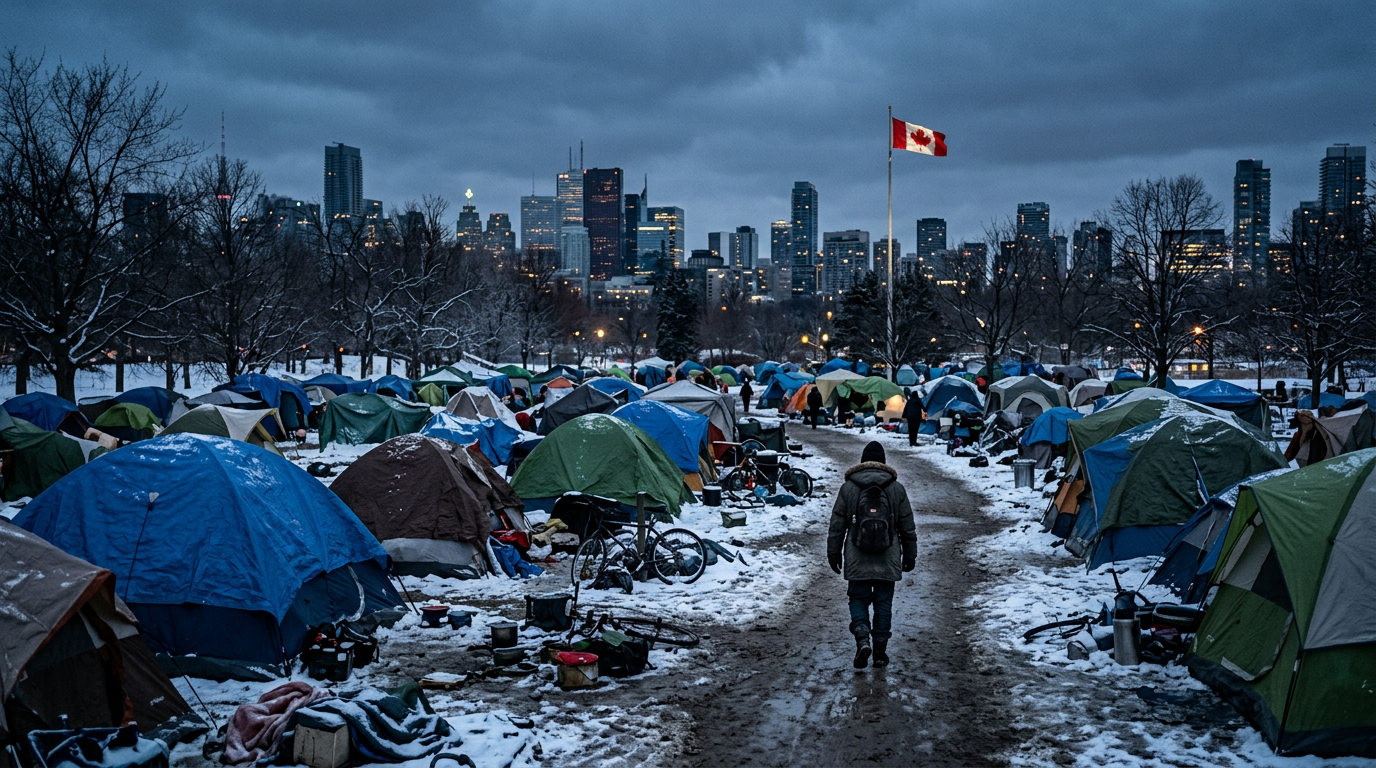
The Salvation Army’s latest analysis found nearly one in three Canadians skipping or reducing meals because they cannot afford groceries. Food bank usage has climbed. In Toronto, the number of children relying on food banks has nearly doubled in recent years. These are not abstract statistics. They are parents deciding which meals to skip so the kids can eat.
Unemployment sits at 6.7%,t with private-sector losses continuing and long-term unemployment rising. Youth rates are higher still. At the same time, the government projects large immigration intakes. The labour market is not absorbing people at the pace the targets assume. Wages are not rising fast enough to keep up with housing and food costs. I talk to people who used to manage on one income and now need two or three jobs just to stay even.
Crime data is mixed. Overall rates fell in 2025 according to Statistics Canada, yet violent crime remains substantially higher than a decade ago. Shoplifting keeps rising. Families in certain neighbourhoods still lock their doors earlier and avoid certain streets after dark. The sense of safety has not returned for everyone, no matter what the national average says.
Mark Carney Is Failing Canadians, and the Receipts Keep Arriving
I keep returning to the same question. How many of these coincidences can stack up before the media and the public demand a clearer accounting? An Ocean Envoy role for the spouse. A multi-billion satellite contract for a longtime friend. A heat pump programme that can benefit Brookfield-linked companies while the prime minister still holds related assets. Immigration targets that outrun infrastructure. A failed US deal that left tariffs in place. Job losses in manufacturing towns. Rising food insecurity.
Mark Carney was sold as the competent manager who would clean up the Liberal record. Instead, the same patterns continue under a new face. Ordinary Canadians are the ones paying the price in higher costs, fewer stable jobs, and eroded trust. The receipts are piling up in plain sight. It is past time the coverage matched the facts instead of protecting the brand.
❓FAQ
Telesat received a $2.3 billion contract for military satellite communications in the Arctic. Conservatives have asked the ethics commissioner to review Mark Carney’s long friendship with CEO Dan Goldberg because no ethics screen currently covers the company.
Carney has disclosed holdings linked to Brookfield companies that finance and install heat pumps. Critics argue the $2 billion rebate programme can increase the value of those assets. The government says the programme is open to all eligible installers.
Fisheries Minister Joanne Thompson appointed her as Canada’s first Ocean Envoy and chair of the 2027 Our Ocean Conference in Halifax. The role is unpaid. Questions focus on the special access that comes with being the prime minister’s spouse.
Unemployment reached 6.7% in October, with private-sector job losses. The government still plans large permanent resident intakes. Critics say the combination pressures wages, housing, and services for existing residents.
Negotiations collapsed in August over last-minute US demands on autos, steel, aluminum, and other issues. Mark Carney said the terms would harm key Canadian industries. Tariffs followed, and no new comprehensive deal has been reached.




Leave a Reply