

Is Free Speech in Canada Under Threat? When Police Knock Over Online Posts
A Moment That Made Canadians Stop and Think
Something happened recently that made a lot of Canadians pause and ask an uncomfortable question about the direction of this country.
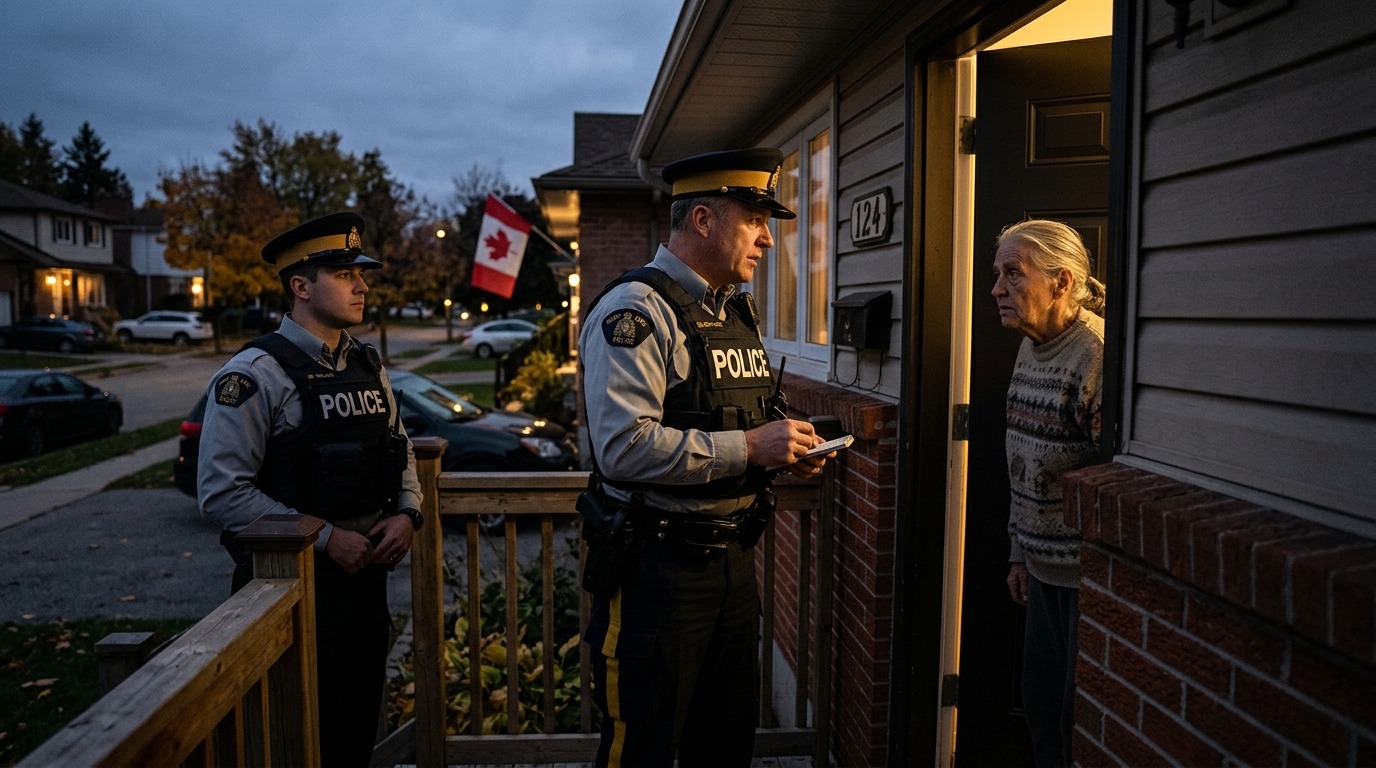
Police officers showed up at someone’s door. They were not responding to a robbery. They were not investigating an assault. They were not chasing down organized crime.
They were there because of something written online.
That moment has ignited a national debate about free speech in Canada, and it is a debate that is not going away anytime soon.
The video that sparked the conversation shows Toronto police knocking on the door of a woman over a social media post she allegedly made about the Prime Minister. The interaction quickly became tense. The woman demanded to see the alleged post and pushed back against the idea that police should be showing up at her home over words on the internet.
Millions of Canadians watched that clip and instantly divided into two camps.
Some people saw a dangerous example of government intimidation.
Others argued the police were doing their job and investigating a possible threat.
But behind that argument lies a deeper issue that cannot be ignored.
What does this say about the future of free speech in Canada?
📹 Watch the Video That Sparked This Article
The Police Visit That Triggered the Debate
The video begins with police officers explaining they are investigating online statements that were interpreted as threats toward the Prime Minister.
The woman immediately demands clarification.
She asks the officers what she actually said and asks them to show proof of the alleged post. The officers warn her that statements interpreted as threats could lead to charges if they continue.
The exchange becomes heated, with the woman accusing the officers of wasting taxpayer money and harassing citizens over political speech.
Whether viewers agree with her language or not, the moment hit a nerve across the country.
Because Canadians suddenly saw a scenario that raises uncomfortable questions.
If police can show up over a political comment online, how far does that authority extend?
What exactly counts as a threat?
Where does political anger end and criminal speech begin?
These questions strike at the heart of free speech in Canada, and Canadians deserve clear answers.
The Gray Area Between Speech and Threats

Let’s be honest about something right away.
Threats of violence are serious, and police should investigate them.
If someone writes online that they plan to hurt someone, law enforcement absolutely has a duty to act.
But the challenge comes when political speech enters a gray area.
Politics has always been messy and emotional. People exaggerate. People vent. People use dramatic language to express frustration.
That kind of speech has existed for centuries in democracies around the world.
Political pamphlets from the 1700s contained language that would probably cause modern politicians to faint.
The problem is that the line between political hyperbole and criminal threats is not always clear.
And when that line becomes blurry, citizens begin worrying that their right to speak freely may depend on how someone else interprets their words.
That uncertainty alone can chill public discussion.
What the Charter Actually Says
Canada does have strong constitutional protection for speech.
Section 2(b) of the Canadian Charter of Rights and Freedoms guarantees freedom of expression. This protection covers a wide range of communication, including political opinions, religious beliefs, artistic expression, and criticism of government.
In other words, Canadians absolutely have the right to criticize politicians.
The Department of Justice Canada confirms that freedom of expression protects communication that conveys meaning, including controversial or unpopular opinions.
However, the Charter also allows limits.
Courts can restrict speech that crosses into areas such as criminal threats, hate propaganda, or incitement to violence.
Those limits are where debates begin.
Because the interpretation of those limits changes over time, depending on cultural shifts and political pressures.
Why Canadians Feel So Uneasy Right Now
The reason this video exploded online has less to do with one police visit and more to do with the national mood.
Canada is under immense pressure right now.
Millions of Canadians feel financially squeezed, politically ignored, and socially divided.
Food bank usage has reached record levels across the country. According to Food Banks Canada, nearly two million visits are made to food banks every month.
That statistic alone should set off alarm bells in a wealthy country like Canada.
Two million visits means millions of people are struggling to afford groceries.
At the same time, housing prices remain out of reach for younger Canadians, and many families are living paycheck to paycheck.
When citizens are under that kind of stress, political frustration builds quickly.
And when frustration builds, political speech becomes sharper.
A Nation That Feels Divided
Anyone who spends time talking with ordinary Canadians can feel it immediately.
The country feels fractured.
Political conversations that once happened casually now trigger arguments between friends and family members.
Some Canadians believe the government has failed them economically.
Others believe the biggest threat comes from social intolerance and political extremism.
Both sides feel misunderstood and ignored.
That tension creates an environment where people speak more aggressively about politics.
And when speech becomes more aggressive, governments often respond by tightening control over speech itself.
History shows that pattern repeating again and again.
Free Speech Battles Around the World
Canada is not the only country facing these debates.
Across the Western world, governments and courts are struggling with how to handle controversial speech.
One of the most famous cases in recent years involved Irish teacher Enoch Burke.
Burke refused to use transgender pronouns for a student because he said doing so violated his Christian beliefs. The dispute escalated into a legal battle that eventually resulted in jail time after he refused to comply with court orders.
The case triggered an international debate about religious freedom and free speech in Europe.
Supporters said Burke was defending freedom of conscience.
Critics argued that schools must enforce policies that protect students.
Regardless of where someone stands on that issue, the case showed how quickly speech disputes can spiral into legal conflicts.
The Finnish Case That Shocked Europe
Another case that caught global attention occurred in Finland.
Member of Parliament Päivi Räsänen faced criminal prosecution after posting a Bible verse online that criticized church support for Pride events.
The case dragged through the courts for years before she was ultimately acquitted.
Yet the mere fact that a criminal trial occurred stunned many observers.
For critics of free speech regulation, the case raised an alarming question.
If quoting religious scripture can lead to prosecution, how far can speech laws go?
Canada Has Already Seen Similar Conflicts

Canada has not escaped these battles.
Former Chilliwack school trustee Barry Neufeld became the center of a legal controversy after criticizing gender identity policies in schools.
A court later ordered him to pay damages connected to the dispute, totalling approximately $750,000.
That ruling shocked many Canadians.
Not necessarily because they agreed with his views.
But because the financial consequences of expressing controversial opinions suddenly became very real.
Cases like this remind Canadians that speech disputes can carry enormous legal risks.
Immigration, Public Safety, and Public Trust
Another issue feeding public frustration involves immigration and public safety concerns.
Many Canadians worry that rapid population growth is placing enormous strain on housing, healthcare, and infrastructure.
These concerns are not fringe ideas.
Polling consistently shows Canadians are increasingly worried about the pace of immigration and its economic impact.
I explored this issue in detail in my earlier article on Canada’s public safety and immigration collapse, which breaks down how immigration pressures intersect with crime trends and community safety.
When governments dismiss those concerns outright, public anger grows stronger.
And when public anger grows stronger, political speech becomes louder and more confrontational.
The Slow Creep of Government Control
The greatest threat to free speech in Canada rarely arrives in one dramatic moment.
Freedom tends to erode gradually.
Each new regulation appears small.
Each enforcement action sounds reasonable.
Each restriction claims noble intentions.
Then one day, citizens realize the boundaries of acceptable speech have moved far beyond where they once stood.
History shows that free societies lose speech rights slowly rather than suddenly.
That is why every incident involving speech enforcement deserves careful scrutiny.
Why Free Speech Protects Unpopular Ideas
Free speech exists primarily to protect ideas that many people dislike.
Popular opinions rarely need protection.
They dominate media coverage, political institutions, and social discourse.
The true test of freedom occurs when someone says something controversial.
If speech protection disappears whenever someone feels offended, then freedom of expression stops being a right.
It becomes a privilege granted by those who hold power.
And privileges can be revoked very quickly.
Canadians Are Starting to Pay Attention
The reaction to the police door video reveals something important.
People from all political backgrounds felt uneasy watching it.
Some feared government overreach.
Others feared rising hostility in political speech.
Many Canadians simply felt uncomfortable seeing law enforcement involved in political expression.
That reaction suggests something deeper is happening.
Canadians are beginning to realize that free speech in Canada cannot be taken for granted.
Every generation must defend it.
Or risk losing it.
The Question Canadians Must Answer

The debate sparked by this video ultimately comes down to a simple question.
Should police ever show up at someone’s door because of a social media post?
Maybe the answer is sometimes.
Maybe it depends on the seriousness of the threat.
But every time it happens, Canadians should stop and examine the situation carefully.
Because freedom of expression is not owned by politicians.
It does not belong to governments.
It belongs to the citizens who rely on it to speak openly about the direction of their country.
And if Canadians lose that right, rebuilding it later becomes incredibly difficult.
FAQ:
Is free speech protected in Canada?
Yes. Section 2(b) of the Canadian Charter of Rights and Freedoms protects freedom of expression, although certain limits exist regarding threats and incitement to violence.
Yes. Law enforcement can investigate posts that may contain threats or criminal content.
Why are Canadians debating free speech more today?
Political division, social media, and new speech laws have sparked growing concerns about expression rights.

Leave a Reply